There is an interesting market evolution happening in the AgriFoodTech sector, as cellular agriculture and precision fermentation founders face a grueling reality check on the human side of the aisle.
The Human Food Gate: Decades of political logjams, regulatory backlogs, and arduous novel food approval processes mean that bringing a new protein to human plates takes a massive amount of time and capital. For instance, the European Union’s Novel Food Regulation demands exhaustive, multi-year toxicological testing. Even if a product clears these legal hurdles, companies face culturally protective consumers who are notoriously sensitive and skeptical about terms like “cultivated”, “precision-fermented,” or “lab-grown” ingredients on their own dinner plates.
The Pet Food Gate: Conversely, the companion animal sector offers a much smoother entry point. First, it is a hyper-premiumized market, driven by the “pet humanization” trend, where owners treat their pets like children and are willing to pay top dollar for advanced functional health benefits. Second, it offers a drastically faster track to regulatory clearance, with pathways that don’t suffer from the same bureaucratic bottlenecks as human food laws. Finally, the consumer base consists of passionate pet parents who are fiercely dedicated to sustainability, clean labels, and animal welfare. Many face an ethical dilemma feeding factory-farmed livestock to their beloved animals and actively seek out eco-friendly alternatives to slash their household’s carbon footprint.
While the scientific synergy between human-grade nutrition and companion animal care is clear, it is also an elegant solution to a massive, overlooked ecological crisis. Research published in PLOS ONE highlights that the massive volume of meat-dependent diets consumed by dogs and cats results in significant environmental impacts, directly compounding global greenhouse gas emissions. Because increasing livestock production stands as a primary threat to the sustainability of the global food system, the non-negligible carbon footprint of pet food exacerbates the environmental damage already posed by human dietary choices. Furthermore, traditional commercial pet food lines are estimated to account for as much as a quarter (25%) of the total environmental impacts of factory farming.
This heavy footprint reframes the entire discussion: alt-protein startups aren’t just entering the pet food market as a quick regulatory loophole to make money off existing tech. Instead, the strategy serves as a blueprint for hitting a definitive triple bottom line; balancing purpose with performance by solving for:
- People (and their Pets): It eliminates the risk of toxic contaminants. While human food undergoes strict regulatory testing, commercial pet food often slips through the cracks, resulting in devastating FDA recalls for lethal contaminants like pentobarbital (an animal euthanizing agent). Biotech guarantees 100% clean, transparent, and safe nutrition for pet families.
- Planet: It directly resolves the “humanization” dilemma. Modern premium pet food increasingly relies on choice meat cuts that humans recognize as edible, putting pets in direct competition with the human food system for resources. Shifting this demand to plant-based, insect, and cell-cultured proteins directly reduces greenhouse gas emissions and mitigates a severe threat to global agricultural sustainability.
- Profit: It turns a massive challenge into a trillion-dollar economic opportunity. Purpose-driven pet parents represent a rapidly growing market segment willing to pay a heavy premium for ethical products. By capturing this high-margin sector, biotech startups can generate immediate commercial revenue, prove manufacturing scalability, and achieve market validation years before human safety authorities give them the green light.
Why Pets Move Faster Than Humans
Changing how humanity eats is a bureaucratic marathon. If you invent a novel cultivated protein, the Food and Drug Administration (FDA), European Food Safety Authority, and individual national regulators are going to put you through an incredibly intense and exhaustive evaluation process.
However, in jurisdictions like the United States, the regulatory pathways for pet food ingredients can offer strategic advantages. The FDA’s Center for Veterinary Medicine (CVM) works alongside the Association of American Feed Control Officials (AAFCO) to evaluate ingredients. While safety standards remain uncompromisingly strict, the review timelines for non-human consumption pathways have historically moved with greater agility, and the market testing environments are highly receptive.
Furthermore, pet food demands massive volume. Startups burning through venture capital cash cannot afford to wait five years in a lab for human novel food clearances. By entering pet food, they can optimize their bioreactors, bring production costs down, and bypass the “valley of death.”
The State of Play: Data Behind the Sustainable Pet Food Landscape
According to recent FoodTech Data Navigator datasets tracking 116 global AgriFoodTech startups in the pet care ecosystem, we can see exactly where investors are placing their bets, how the technology waves are maturing, and where the commercial opportunities lie.
1. The Startup Volume vs. Investor Dollars
When it comes to raw company volume and investor backing, Insects leads as the largest alternative protein category with 23 operational startups attracting a massive $139M in capital. This is closely followed by Plant-based innovations, capturing $87M across 15–18 enterprises.
| Technology Category | Global Startup Count | Total Investor Funding ($M) | Geographic Hubs |
|---|---|---|---|
| Insects | 23 companies | $139M | France (5 companies) |
| Plant-based | 15 companies | $87M | United States (7 companies) |
| Cultivated meat | 9 companies | $49M | United States (3 companies) |
| Upcycled / Waste | 5 companies | $43M | Dispersed / Emerging |
| Fermentation | 6 companies | $1.1M | Single-Company Proof of Concept |
The broader backdrop market contains an additional 58 conventional Direct-to-Consumer (D2C) players, such as fresh meal subscription brands and specialty treat companies, providing a premiumized retail landscape eager for sustainable ingredients.
2. The Anomalous Fermentation Funding Gap
The data reveals a striking structural anomaly in the Fermentation category. While there are 6 distinct companies filed under this tech stack, the recorded category funding sits at a mere $1.1M. Why? Because Boulder-based Bond Pet Foods, the undisputed pioneer of pure precision fermentation in the pet space, is separately backed by $42M in capital, while the remaining players are broader biofermentation or micro-flora concepts hovering near zero. This explicitly confirms that precision fermentation for companion animals remains at a hyper-focused, single-company proof-of-concept stage.
3. The Maturity Curve & The Three Structural Waves
The industry’s timeline reveals distinct innovation waves driven by median founding years:
- The Proof-of-Concept Era (Median Founding Year: 2017): Plant-based and Insect technologies laid the baseline infrastructure. Today, Insects is the most commercially mature sector, with 57% of insect startups sitting in the “Growth” phase.
- The Transition Era (Median Founding Year: 2018): Fermentation and Upcycled/Waste solutions stepped in to bridge ingredient functionality.
- The New Frontier (Median Founding Year: 2021): Cultivated meat represents the newest biotech boundary. Because it is so nascent, 89% of cultivated pet food startups remain in the “Validation” stage.
Companies in the Frontline of Sustainable Pet Food
Plant-Based / Vegan Innovation
Data from the FoodTech Data Navigator shows that 3 out of the 15 primary plant-based startups have already been successfully acquired by massive incumbents (including HOWND, Wild Earth, and Bright Planet Pet). This underscores that plant-forward infrastructure is an immediate commercialization accelerator.
Editor’s Note: A previous version of this article listed NomNomNow among primary plant-based startups. NomNomNow is primarily a fresh meat-based pet food brand that also offers vegetarian meal options. The data point has been updated to reflect 3 out of 14 primary plant-based startups acquired by major incumbents.
Case Study: Omni Pet
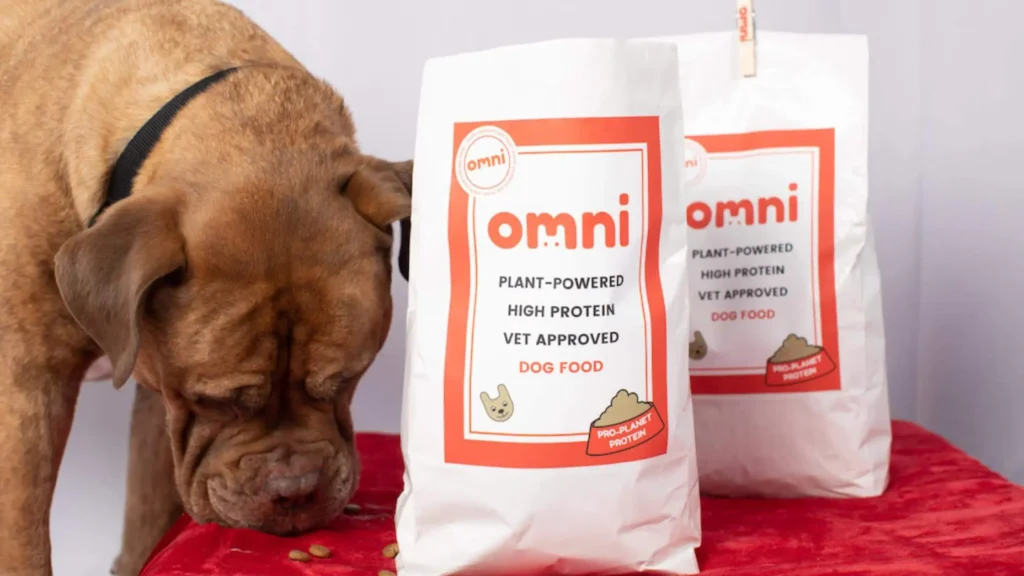 Courtesy: Omni Pet
UK-based Omni Pet took a clinical approach to the alternative protein space, proving that dogs thrive on alternative nutrition, not just tolerate it.
- The Innovation: Vet-formulated plant-based diets rich in pulse and legume proteins, designed to improve canine digestion and skin health.
- The Move: Omni quickly became a market leader in plant-based pet nutrition, but they didn’t stop there. They partnered with Meatly to unveil the world’s first cultivated meat pet food cans, creating a hybrid future for sustainable pet diets.
- The Strategy: Omni used highly accessible, clinically proven plant-based foods to build consumer trust and immediate revenue. With that distribution flywheel turning, they are seamlessly positioning themselves as the go-to brand to scale cultivated meats directly to consumer bowls.
Case Study: HOWND
HOWND proved that plant-based pet care could scale beyond niche online communities into mainstream corporate retail networks.
- The Innovation: Superfood-infused, 100% hypoallergenic vegan wet and dry recipes crafted with complementary plant proteins and fortified with essential amino acids for a scientifically complete daily diet.
- The Move: After establishing an award-winning footprint in ethical pet nutrition and cruelty-free grooming, HOWND was officially acquired by corporate pet giant Pets Choice.
- The Strategy: This acquisition allowed the core founders to scale their ethical recipes across thousands of major retail doors using Pets Choice’s massive institutional supply chains. It serves as an ultimate case study of how alternative FoodTech brands can achieve mass market volume by letting themselves be absorbed into established corporate distribution systems.
Insect Protein Disruption
Essentially two industries in one: A deeply split go-to-market structure featuring B2B industrial ingredient suppliers and consumer-facing B2C brands.
Case Study: Chippin

Courtesy: Chippin
D2C disruptor Chippin entered the alternative protein arena with a clear mission: to eliminate resource-heavy agriculture from our pets’ carbon footprints.
- The Innovation: Sourcing eco-friendly cricket protein alongside wild-caught, overpopulated invasive fish species.
- The Move: Chippin has led the charge in transforming environmental threats into premium pet snacks, explicitly anchoring their line with eco-friendly Silver Copi (carp) ingredients to restore river ecosystems.
- The Strategy: By building their brand around crickets, which emit up to 100x fewer greenhouse gases than beef, Chippin established an immediate footprint. They bypassed traditional agricultural pushback by proving that the modern consumer values proactive water conservation and biodiversity protection.
Case Study: Tomojo
Over in France, Tomojo bridges the gap between pet health and planetary health by replacing resource-intensive livestock with eco-friendly, highly digestible insect protein.
- The Innovation: Utilizing high-quality mealworm (Tenebrio molitor after acquisition of Invers) and black soldier fly larvae meal to replace chicken and beef byproducts.
- The Move: They formulated premium, vet-backed hypoallergenic kibble for dogs and cats that cuts down water use by up to 100 times compared to conventional chicken production and 7x less CO2 compared to beef.
- The Strategy: Tomojo navigated complex European Union pet food regulations to successfully roll out products across major retail networks in France. By capitalizing on the ‘clean label’ trend, they appealed directly to urban pet parents looking to reduce their household’s overall ecological footprint.
Cultivated Meat & Fermentation
The newest frontier. While narratively “ingredient-led,” almost the entire category is still trying to build standalone consumer brands, leaving a massive B2B gap.
Case Study: Meatly
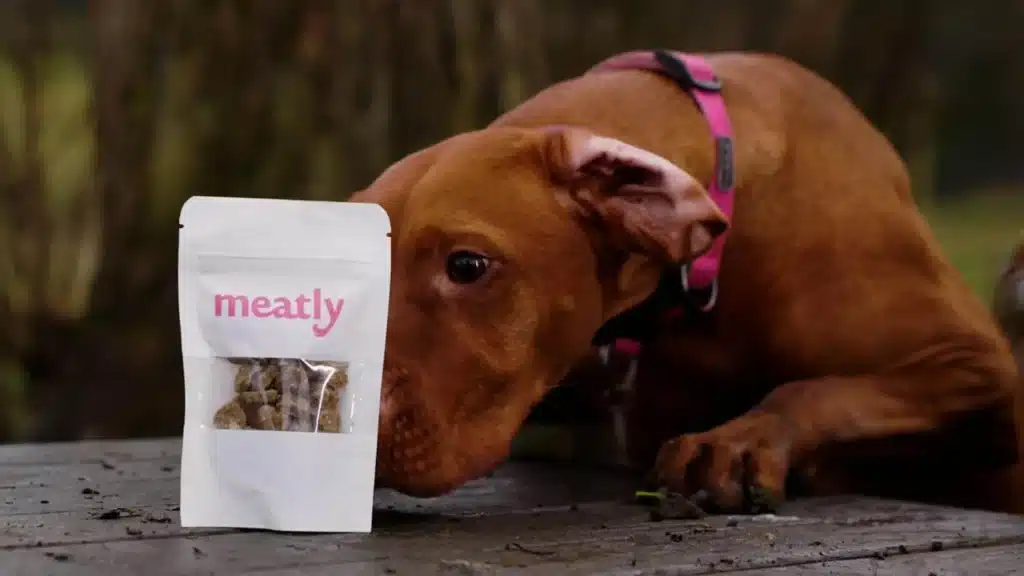
Courtesy: Meatly
Meatly has become the poster child for the pet-first biotech strategy. While human cultivated meat companies in Europe are bogged down by strict political frameworks, Meatly looked at the UK landscape and spotted a massive loophole.
- The Innovation: Cultivated chicken meat grown from a single sample of chicken cells, produced entirely without animal slaughter.
- The Move: Meatly made history by becoming the first company in the world to secure regulatory approval to sell cultivated meat for pet food from the UK’s the Animal and Plant Health Agency (APHA) and the Department for Environment, Food and Rural Affairs (DEFRA).
- The Strategy: While human-grade cultivated meat is still heavily restricted on mainstream UK supermarket shelves due to complex multi-year steps, Meatly bypassed that timeline entirely. They partnered with brands like Pets at Home to launch commercial products, generating immediate revenue and scaling their bioreactor technology in real-time.
Case Study: BioCraft Pet Nutrition
Originally founded as Because Animals, BioCraft Pet Nutrition realized early on that building a standalone consumer brand was too slow. They shifted their entire business model to become a B2B supplier of cultivated meat ingredients exclusively for the pet food industry.
- The Innovation: Cultivated mouse and chicken meat slurry optimized specifically for the nutritional requirements of cats and dogs, including essential taurine and amino acids.
- The Move: They completely stopped consumer-facing product lines to focus on supplying mainstream pet food giants who are desperate to hit their corporate net-zero sustainability targets.
- The Strategy: Pet food is responsible for an estimated 25% of the environmental impact of meat production in the US. By pitching their cultivated meat as an eco-friendly, antibiotic-free supply chain solution to massive pet corporations, BioCraft secures forward-purchasing agreements that fund their ongoing cellular R&D.
Case Study: Bond Pet Foods

Courtesy: Bond Pet Foods
While companies trying to sell to humans have faced a steep climb convincing consumers to swap out traditional dairy and eggs for precision-fermented proteins, Boulder-based Bond Pet Foods took that same technology straight to the pet store.
- The Innovation: Uses precision fermentation to brew identical animal proteins like chicken, turkey, and beef in a yeast-based system.
- The Move: Bond achieved a historic milestone by securing an official FDA Letter of No Objection for its precision-fermented lamb protein, completing a commercial safety review for canine diets.
- The Strategy: Through a deep commercial partnership with legacy giant Hill’s Pet Nutrition, Bond is bypassing consumer aesthetic biases. They are delivering tons of fermentation-derived ingredients directly to industrial plants to be formulated into premium therapeutic diets.
Case Study: Bene Meat Technologies
Czech-based Bene Meat Technologies is proving that the path to true market validation means moving quickly past promises and delivering robust, industrial-scale cellular systems. The company operates as a B2B white-label engine for alternative protein generation.
- The Innovation: Developing cost-efficient, reliable, animal-free cellular production modules designed to integrate directly with industrial manufacturers.
- The Move: Rather than hyping standalone consumer products, Bene Meat focused on regulatory clearance and became the first company to register its cultivated meat pet food raw materials inside the European Union.
- The Strategy: By completing a peer-reviewed lifecycle analysis and focusing strictly on the companion animal sector first, they managed to bypass human regulatory logjams. They leverage their operating industrial-scale modules to help conventional agricultural giants evolve seamlessly, optimizing bioreactors and driving down production costs in real-time while human-grade clearances slow down competitors.
The Bottom Line: A Win-Win for Global Climate Goals
Courtesy: BioCraft Pet Nutrition
The crossover of foodtech into pet food is proving to be one of the smartest economic maneuvers of the biotech era. Startups avoid the paralyzing timelines of human food regulatory bodies, generate early commercial traction, and survive the notorious biotech “valley of death”.
Simultaneously, the planet gets an immediate break. With pet food consuming billions of pounds of animal products annually, moving even a fraction of that demand to cultivated, fermented, and insect-based alternatives represents a massive victory for global sustainability goals.
The line between human-tech and pet-tech has dissolved. In the current era of climate biotech, the smartest path to the human dinner plate might just start at the bottom of a dog bowl.
Forward Fooding is the world’s first collaborative platform for the Food & Beverage industry via FoodTech Data Intelligence and Corporate-Startup Collaboration – Learn more about our Consultancy and Scouting Services and our Startup Network.