This is Edition 05 of the Forward Fooding Novel Ingredients Series, where we go deep on the ingredients we think will define the next decade of food. If you missed them, Edition 01 covered Rubisco, Edition 02 covered Sugars & Sweeteners, Edition 03 covered Novel Fats & Oils, and Edition 04 covered Lactoferrin.
The Clock Is Running on Synthetic Dyes
Of all the ingredient transitions covered in this series, the novel food color story has the most urgent regulatory clock and the most concrete deadlines.
In January 2025, the U.S. Food and Drug Administration (FDA) banned Red Dye No. 3, a petroleum-derived colorant identified as carcinogenic in animal studies, that had been used in thousands of products for decades, from icings and sprinkles to cocktail cherries and candy. The ban takes effect in early 2027. It was followed in April 2025 by an announcement from HHS Secretary Robert F. Kennedy Jr. and FDA Commissioner Marty Makary that the agency would pursue a phaseout of the six remaining commonly used petroleum-derived certified color additives: Red 40, Yellow 5, Yellow 6, Blue 1, Blue 2, and Green 3, with a compliance deadline of October 2027.
That single cascade of regulatory action triggered commitments across the industry at speed. Nestlé pledged to eliminate artificial dyes from all its US food and beverage products by mid-2026. General Mills, Kraft Heinz, Kellanova, WK Kellogg Co., Campbell’s, Conagra, Grupo Bimbo, Hershey, J.M. Smucker, and Tyson have all announced plans to remove synthetic dyes across their product lines. As of early 2026, roughly 40% of the packaged food supply had made near-term removal pledges.
The MAHA movement has added political momentum and public visibility. 68% of Americans now support removing artificial colorants from food, according to Nielsen data from 2025. Nearly 40 state bills targeting synthetic food dyes had been introduced across the US as of March 2025. West Virginia became the first state to pass a direct ban, covering seven synthetic dyes in school meals from August 2025, and statewide by 2028. California, Texas, Louisiana, Arizona, Delaware, Tennessee, Utah, and Virginia have all passed or introduced related legislation.
The transition is happening. The question is what replaces synthetic dyes and whether the alternatives are actually ready.
The Problem with “Natural” Colors
The obvious answer to synthetic dyes is natural colors. Beet extract for red. Turmeric for yellow. Spirulina for blue. This has been the industry’s default position for years, but none of these alternatives perform like synthetic dyes under real food processing conditions.
Conventional natural colors extracted from agricultural sources are pH-sensitive, heat-unstable, and light-degradable. Beetroot extract bleaches under pasteurization. Turmeric turns brown at baking temperatures. Carmine (the red pigment derived from crushed cochineal insects) provides reasonable stability but carries allergen concerns and is incompatible with vegetarian, vegan, kosher, and halal diets. Anthocyanins (found in berries and red cabbage) shift color dramatically with pH changes, making them unreliable across different product formulations.
There is also a supply problem. Natural color crops are subject to the same agricultural variability as any other commodity: weather, disease, and geopolitical disruption. Batch-to-batch consistency is genuinely harder to achieve when the pigment source is a field crop rather than a controlled process. And because natural pigments are present in crops at lower concentrations than synthetic dyes appear in a mixing vat, you need significantly more product per kilogram of finished goods to achieve the same visual intensity, which affects cost economics.
This is the gap that fermentation-derived food colors are positioned to fill.
What Are Fermentation-Derived Colors?
Natural pigments, including carotenoids, betalains, anthocyanins, and flavonoids, exist throughout biology, produced by plants, fungi, bacteria, and algae. Extracting them from crops can be inconsistent and land-intensive. But these same molecules can be produced by programming a microorganism in a bioreactor to synthesize the target pigment on demand.
Fermentation-based approaches remove crop agriculture from the equation entirely. The output is consistent, the supply chain is domestic and controllable, and the scale is determined by bioreactor capacity rather than harvest yield. Filamentous fungi are particularly promising as production hosts: they accumulate pigments at high concentrations, secrete them efficiently into the growth medium, and offer a wide repertoire of pigment chemistries.
Critically, fermentation-derived pigments, particularly those from fungi, can be engineered for pH and thermal stability. This is the core insight that separates the new generation of fermentation colors from the agricultural natural colors they’re replacing. The same molecule, produced in a bioreactor rather than a beet field, can be made more resilient through strain optimization and process engineering. The result is a natural color that performs like a synthetic one.
Who’s Building This: The Commercial Landscape
The FoodTech Data Navigator tracks 30 companies in the novel food color space, with total funding across the ecosystem exceeding $209M. Funding activity has increased consistently over the past three years, with the regulatory phaseout acting as a pull signal for the category. Here’s where the leading companies stand.
Michroma (Rosario, Argentina/San Francisco, US) is the category’s most technically distinctive company and arguably its most commercially advanced. Michroma uses CRISPR-edited filamentous fungi as precision fermentation platforms to produce high-performance natural pigments. Its flagship product, Red+, is heat- and pH-stable, maintaining color vibrancy through pasteurisation, baking, and extrusion, conditions under which beet extract and carmine typically fail. Red+ has greater coloring intensity per gram than beetroot powder, meaning less product is required per application, which directly improves cost economics for food manufacturers.
In September 2025, Michroma announced a strategic manufacturing partnership with CJ CheilJedang, the South Korean food and biotech conglomerate and the world’s largest fermentation company. CJ CheilJedang is both an investor in Michroma and its commercial-scale production partner, with manufacturing capabilities across Indonesia, China, Malaysia, the US, Brazil, and South Korea. According to Michroma CEO Ricky Cassini, the partnership helps “bring our innovations to market at scale, offering reliable, high-performance natural solutions that address the needs of global manufacturers.”
Michroma is currently filing an FDA color additive petition for Red+ and is developing a full color pipeline including yellows, oranges, and a white alternative to titanium dioxide. The company won the Global Food Tech Award Americas at Future Food-Tech in March 2026, and the Future is Fungi Award in 2025. Total funding: $7.6M
Phytolon (Yokne’am Illit, Israel) holds the category’s most important regulatory milestone to date. In February 2026, the FDA approved Phytolon’s Beetroot Red as a color additive, the first fermentation-derived food color to receive FDA approval in the US. The ingredient is produced via controlled fermentation of genetically engineered baker’s yeast, which expresses betanin, a betalain pigment naturally found in red beets. The finished product is a clean, stable red pigment available in both liquid and powder formats. Phytolon’s Beetroot Red is stable across a wide pH range and under heat, and can be used across bakery, savory, frozen, dairy, and confectionery applications.
A $23.6M Series B followed immediately in May 2026, earmarked for US commercialization and CPG supply. In April 2025, a collaboration with Ginkgo Bioworks hit a key milestone, nearly tripling the production efficiency of Phytolon’s color strains, reducing both production costs and carbon footprint significantly. Total funding: $45M
 Source: Phytolon
Chromologics (Søborg, Denmark) is a Technical University of Denmark spin-out building a fungal biotech platform for a portfolio of novel natural colorants, with its first product Natu.Red at the front of the pipeline. In November 2025, Chromologics raised $8M earmarked for FDA and European Food Safety Authority (EFSA) regulatory submissions and production scale-up. Döhler Ventures participated in the funding round, signaling a sustainability statement rather than a supply chain bet. Total funding: $25.3M
Sparxell (Cambridge, UK) occupies distinct technical territory. Rather than producing chemical pigments, Sparxell creates structural colors from plant cellulose, colors that arise through light refraction rather than pigment chemistry, in the same way a butterfly wing or peacock feather produces color without dye. The resulting colors are biodegradable, plastic-free, and physically stable in a way that chemical pigments are not, since they don’t fade through the same photodegradation pathways.
In January 2026, Sparxell closed a $5M funding round, targeting applications across food, cosmetics, packaging, and textiles. Total funding: $10.6M
Beyond these four, the broader ecosystem tracked on the FoodTech Data Navigator includes:
Conagen (carotenoids and flavonoids via fermentation)
Seprify (plant-based titanium dioxide alternative)
Origin by Ocean (pigments from algae blooms)
Kuenhle AgroSystem (microalgae-derived carotenoids)
MycoColors (fungi-derived dyes for food and textiles)
Synergia Biotech (replaces artificial color additives with phycocyanin or Spirulina-blue)
Supernatural Kitchen (range of plant-based, dye-free baking ingredients)
Lantana Bio (engineered baker’s yeast as natural colorant)
GRA Nutra (naturally sourced carotenoids derived from algae and fermentation)
Why Now: The Investment and Strategic Timing Case
The regulatory driver in this space is unlike anything else in our Novel Ingredients Series. With Rubisco, the timing case was about supply chain optionality. With novel fats, it was the pressure from the EU Deforestation Regulation. But with food colors, there are actual bans, actual legal commitments, and actual dates on a calendar. Red Dye No. 3 is banned effective January 2027. The remaining six petroleum-derived dyes face a phaseout deadline of October 2027. State-level bans are already in effect. The procurement urgency is not hypothetical.
The color additive petition route creates 2027–2028 moats today. Unlike food ingredients, which can often reach the market via the GRAS (Generally Recognized as Safe) pathway, food colors in the US must go through the FDA’s color additive petition process, a separate, more rigorous regulatory route that can take two or more years. Companies filing petitions now are building approvals that competitors filing next year cannot have in time for the 2027 reformulation window. Phytolon’s FDA approval in February 2026, followed immediately by a $23.6M financing round, illustrates the commercial value created by being first through the regulatory door.
Corporate money is moving ahead of the deadline. Ingredient companies and strategic funds are securing supply access before the reformulation wave hits in full, as seen in Novo Holdings, Döhler Ventures, and EIFO backing Chromologics in November 2025, CJ CheilJedang taking both an equity stake and a manufacturing partnership with Michroma in September 2025, and dsm-firmenich partnering with Phytolon.
This is an ideal early market for precision fermentation economics. Natural food colors are high-value, high-margin, and low-volume relative to commodity ingredients. A kilogram of high-performance natural red colorant commands far higher prices than a kilogram of fermentation-derived protein. This means the economics of precision fermentation, which require capital-intensive bioreactor infrastructure, work here before they work in protein or fat. Food color is where the business case for fermentation is most immediately credible.
The natural color market is on a clear growth trajectory. Estimated at around $2.72B today, it is projected to reach $4.75B by 2034, nearly doubling, driven directly by the phaseout of synthetic alternatives.
Applications: Where Novel Colors Are Going
 Source: Exberry
The reformulation challenge is not uniform across categories. Some applications are harder than others, and the stability limitations of conventional natural colors are most acute at the demanding end:
- Beverages (RTD, energy drinks, juices): currently the hardest category, since most natural colors degrade through pasteurisation; fermentation-derived pigments with thermal stability are the primary solution
- Confectionery: high-visibility category where color performance is central to product identity; Michroma’s Red+ stability across pH is directly relevant here
- Dairy and ice cream: multiple pHranges and freeze-thaw cycles; BioconColors is one company specializing in this area
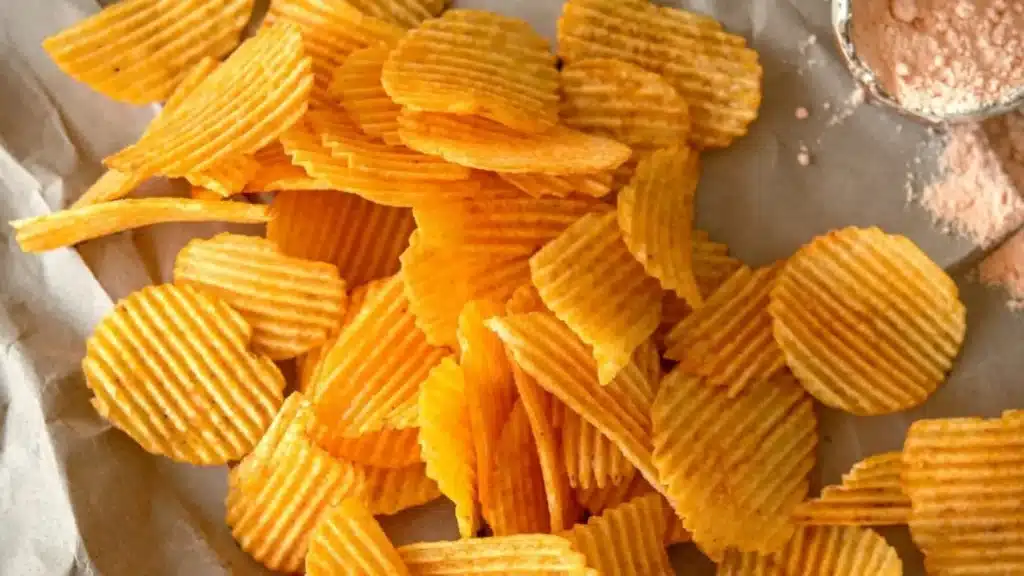
- Cereals and snacks: high-heat processing; beetroot and anthocyanins typically fail in this space where Exberry excels;
- Plant-based meat and dairy: color is one of the biggest formulation challenges in this category; an ingredient that can replicate the appearance of meat or dairy without synthetic dyes is a significant B2B opportunity
- Beauty and cosmetics: the same pigment platforms serving food are naturally adjacent to personal care; Michroma is already in this market
A Note of Caution
The category is building in the right direction, thanks in huge part to regulatory and supply chain urgency. But even that won’t be enough to stop the hurdles the companies in this space will face towards commercialization:
European regulatory approval for fermentation-derived colors is proceeding on a separate, slower timeline than the FDA. Chromologics’ November 2025 raise was specifically earmarked for both FDA and EFSA submissions, indicating that European commercial entry remains a near-future milestone, not a current reality.
Cost parity with synthetic dyes also remains a challenge at scale. Synthetic petroleum-derived dyes are extraordinarily cheap. Even with the economics improved by higher coloring intensity per gram, fermentation-derived natural colors will carry a premium over synthetics for the foreseeable future. The compelling comparison is against other natural colors, where the stability and supply chain advantages make the economics more credible.
Then there’s consumer perception. Products that are genuinely natural in origin but produced through engineered microorganisms will face questions from some consumer segments, and the industry will need to carefully work on the “fermentation-derived natural” framing. Companies can learn a thing or two from precision fermentation dairy and protein, even if that hasn’t been fully solved either.
The natural color category benefits from being the strongest near-term business case for precision fermentation. But that also means it carries the reputational weight of the broader fermentation story: every labeling controversy, every consumer backlash against “lab-made” ingredients, and every scale-up failure in an adjacent category will be felt here too.
The Question for Reformulation Teams
The synthetic dye era is ending on a regulatory schedule that is now publicly known, legally binding in some cases, and proceeding faster than many food companies expected. The replacement technology is not in development; it is being manufactured, approved by regulators, and backed by the largest ingredient companies in the world.
Companies filing color additive petitions today are building the supply relationships and regulatory approvals that will define competitive positioning in 2027 and 2028. The question for reformulation teams and procurement leads is not whether to act; it’s whether you’ve already started.
Want to map the full landscape? Book a demo on the FoodTech Data Navigator to explore the novel food color companies, track funding by stage and technology route, and identify the ingredient partners and investment targets for the reformulation window.
Building in this space? Apply to the FoodTech 500 to get in front of corporates and investors actively tracking this category. Follow us, come to our events, and subscribe to the newsletter — we are already writing Edition 05 of the Novel Ingredients Series.
Forward Fooding is the world’s first collaborative platform for the Food & Beverage industry via FoodTech Data Intelligence and Corporate-Startup Collaboration – Learn more about our Consultancy and Scouting Services and our Startup Network.