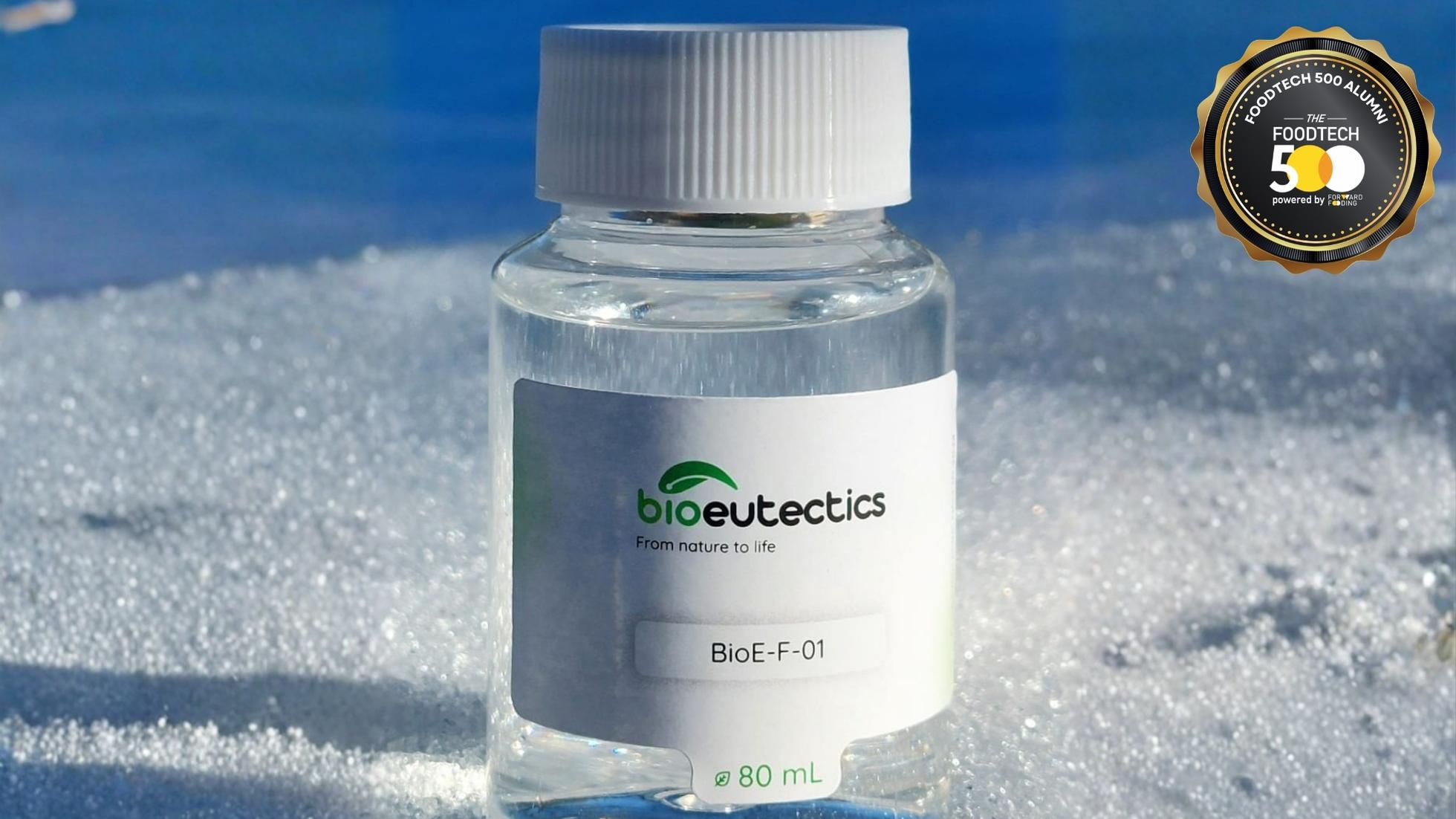
At a time when many are demanding greater sustainability from our industries, one invisible yet foundational challenge persists: the widespread reliance on petrochemical solvents. These traditional chemicals, integral to countless manufacturing processes, carry significant environmental and health drawbacks.
Stepping up to tackle this critical issue is Bioeutectics, led by CEO Tomas Silicaro, reimagining industrial chemistry from the ground up and proving that high-performance solutions can be inherently natural, biodegradable, and non-toxic. The company is spearheading a fundamental shift, offering an alternative that is unequivocally good for the planet and its inhabitants.
We talked to Tomas to discuss the company’s groundbreaking eutectic biomimetic technology, the hard lessons learned from green chemistry failures, and his vision for displacing billions of liters of petrochemical solvents with natural alternatives.

Tomas Silicaro, CEO of Bioeutectics
This interview has been edited for clarity and concision.
Forward Fooding: Why did you start the company, and what is the impact you want to generate at the food system level with your solution?
Tomas Silicaro: I started Bioeutectics because I saw a profound gap in the world of industrial chemistry — a gap between what is possible through nature and what is being practiced through petrochemistry. Throughout my career in market development and innovation, I have experienced firsthand how many “green” solutions end up being only incremental improvements over conventional methods. But when I learned about Natural Deep Eutectic Solvents (NADES) and the way plants themselves create solvating environments through combinations of simple biomolecules, something clicked: Why not reimagine the solvent industry from the ground up — not just “less bad,” but inherently good?
From the beginning, my goal was ambitious: to replace petrochemical solvents used in food, agrotech, cosmetics, and allied industries with natural, biodegradable, non-toxic, high-performance alternatives. These are not compromises — our eutectic biomimetic technology allows us to design solvents that match or exceed traditional performance while eliminating many of their health, safety, and environmental downsides.
In short: I founded Bioeutectics to lead a shift — converting one of the least visible but most foundational parts of the industrial food value chain into something sustainable, transparent, and regenerative. The impact I envision is that, through adoption of our solutions, the food system will become cleaner, safer, and more resilient — from farm to fork — with chemistry that mirrors life rather than fighting it.
Forward Fooding: How does Bioeutectics envision its core technology evolving to address emerging challenges or opportunities in the broader green chemistry landscape?
Tomas Silicaro: Our vision is to evolve NADES into a predictive, AI-driven supramolecular design platform that creates tailor-made green solvents, multifunctional extractants, active-integrated eutectics like our HA product, silicone-free sensorial systems, non-volatile industrial solvents for circular polymer recovery, and bio-based alternatives to petrochemical carriers.
We envision an iterative flywheel where each new industry application provides data to our proprietary AI system, accelerating discovery and scale-up over time. This creates a continuously improving platform that becomes more powerful with each deployment.
And the potential impact of Bioeutectics’ innovation is staggering and measurable.
According to Tomas, “just by replacing 5% of the solvents globally, Bioeutectics would be taking off the equation 1.2 billion liters of solvent that generate 2% of the CO2 emissions in the world.” This demonstrates the profound, systemic change that can be catalyzed by focusing on a fundamental component of the industrial supply chain.
Beyond this headline metric, the company tracks impact through several qualitative and quantitative indicators that reveal the depth of transformation their solutions enable.
- Bioeutectics measures CO2 reduction per kilogram of solvent replaced, capitalizing on the fact that NADES use non-petrochemical, renewable feedstocks.
- The company also tracks the petroleum replacement score, which represents the percentage of petrochemical solvent successfully removed from client formulations.
- Another critical metric is the reduction in synthetic additives—for instance, their Eutectic HA achieves an 80% reduction in synthetic additives in cosmetic formulations.
- Cost-saving KPIs demonstrate total formulation cost reduction, with some applications achieving up to 50% savings, as seen with their HA product.
- For extraction processes, yield improvement metrics show how NADES outperform conventional solvents like hexane in seed oil extraction.
- Finally, performance equivalence or superiority benchmarking results against conventional solvents like DPG, Hexylene Glycol, and Dimethicone validate that sustainability doesn’t require performance compromise.
Navigating Regulatory Complexity: Strategy for Market Access
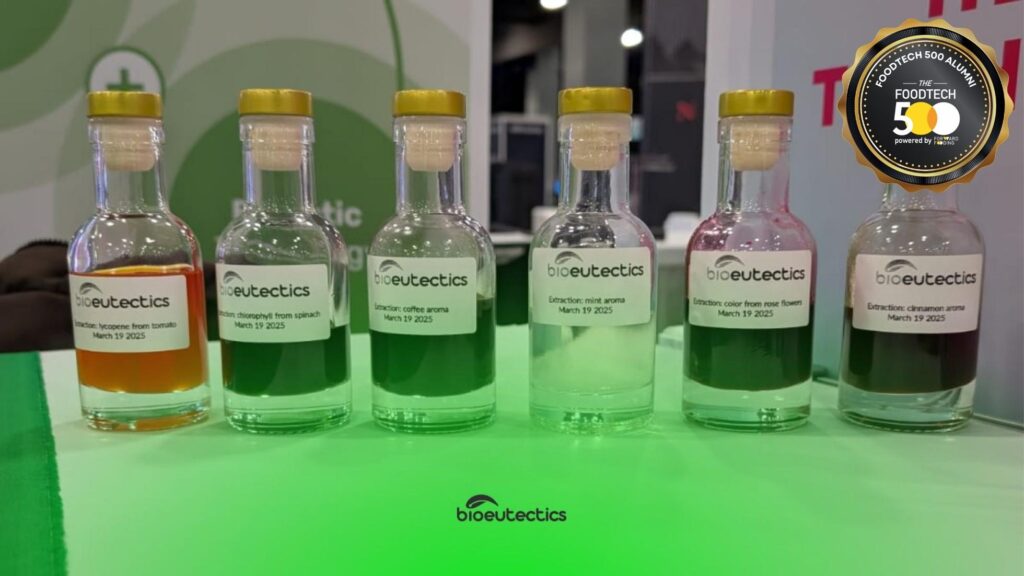
Image courtesy of Bioeutectics
The path to widespread adoption of any new chemical technology requires navigating complex regulatory landscapes that vary significantly across industries and geographies. Bioeutectics has developed sophisticated strategies for each major sector it serves.
Forward Fooding: What specific regulatory hurdles or approvals are most critical for broader adoption of NADES in the food and cosmetics sectors, and what is Bioeutectics’ strategy to navigate them?
Tomas Silicaro: The two sectors have distinct regulatory paths. In cosmetics, key regulatory hurdles include COSMOS natural certification, IFRA compliance for fragrance-related solvents, REACH registration, dermal safety assessments covering irritation, sensitization, TEWL, and stability, as well as preservative-free microbial safety validation.
Bioeutectics’ strategy for cosmetics has been proactive and comprehensive. All launched cosmetic products—including their HA eutectic, DPG alternative, and micellar active—already comply with COSMOS, IFRA, and REACH standards and demonstrate non-irritant profiles. The HA product, for instance, has been clinically tested as non-sensitizing. The company’s use of 100% natural, preservative-free formulations simplifies approval processes and aligns perfectly with clean-label market demands, turning regulatory requirements from obstacles into competitive advantages.
Meanwhile, for food applications, the hurdles center on GRAS status for components, EFSA and USDA approvals for extraction processes, and migration and purity requirements for food-grade solvents. The company’s strategy leverages the fact that all their NADES are based on GRAS-listed sugars, organic acids, and polyols, enabling a favorable regulatory pathway from the outset. Bioeutectics also prioritizes partnerships with large food manufacturers to conduct joint regulatory submissions supported by its extensive analytical and stability data, distributing the regulatory burden and accelerating approval timelines.
Forward Fooding: What are the primary market adoption barriers Bioeutectics anticipates in expanding globally, and what strategies are in place to overcome them?
Tomas Silicaro: The first barrier is risk aversion to replacing established petrochemical solvents. DPG, hexylene glycol, silicones, and ethanol all have decades of familiarity in formulation chemistry. To overcome this, Bioeutectics publishes and shares head-to-head performance data showing that their products, such as BioE-A-31-01, surpass conventional solvents like DPG across more than 30 essential oils. The company also works alongside customers, testing the products in final applications, and provides generous sampling to reduce perceived risk.
The second barrier involves the need for formulation reformulation and validation. Switching solvents requires compatibility testing. Bioeutectics addresses this by providing turnkey formulation support, access to their application lab, and iterative sample development, moving from Version 1.0 to Version 2.0 formulations in close collaboration with clients.
Supply chain maturity and scaling represent the third barrier, as clients require assured production scale before committing to a solvent switch. Bioeutectics has already built a 5,500 metric ton capacity with clear pathways to 32,000 metric tons, providing the volume assurance that large industrial players demand.
The fourth barrier is regulatory unfamiliarity with NADES as a category. While individual components may be well-known, the eutectic systems themselves are novel to many regulatory bodies. Bioeutectics emphasizes that their NADES use only natural, renewable, non-toxic, COSMOS-compliant components, and their classification as functional mixes rather than solvents accelerates regulatory acceptance.
Tomas also discussed the different approaches the company takes to educate and persuade large industrial players to switch from established petrochemical solvents:
- Demonstrating “low-friction integration” through their Replace category products, which serve as drop-in natural substitutes requiring minimal infrastructure changes.
- Direct head-to-head technical benchmarking, wherein they provide detailed solubility curves, data showing 50% reductions in active costs, and performance comparisons (their micellar active achieves 20% preference over hexylene glycol).
- Shared development model, wherein Bioeutectics offers joint formulation optimization, parallel testing with conventional solvent controls, and fast iteration cycles from Version 1.0 to Version 2.0 formulations.
- Showing economic competitiveness, as Bioeutectics’ products help reduce formula or operating costs, as well as eliminate the need to recover solvents or treat dangerous waste. In other cases, companies can unify SKUs with the company’s products because a single solution works as a solvent, stabilizer, and preservative simultaneously.
- Sustainability ROI helps clients quantify CO2 reductions, petroleum replacement, and biodegradability improvements. These metrics increasingly matter for corporate ESG reporting and consumer marketing, turning sustainability from a nice-to-have into a competitive advantage.
The Power of Strategic Partnerships and Learning from Failure

From left: CTO Federico Gomez, CSO Maria Fernanda Silva, and CEO Tomas Silicaro
Regarding collaborations, Bioeutectics understands that partnering with established players is not just beneficial—it’s essential for achieving the scale of impact the company envisions.
Forward Fooding: In your view, what role do partnerships and collaborations with large corporations play in reshaping the food system?
Tomas Silicaro: Partnerships and collaborations with large corporations are absolutely central to the transformation of the global food system. No single startup, no matter how innovative, can shift such a massive and entrenched industry alone. The food system touches every corner of society—from farmers and processors to brands and consumers—and its scale requires collective action.
For Bioeutectics, partnerships with established players provide three critical levers of impact:
- Scale and Adoption
Large corporations already have global supply chains, production capacity, and distribution channels. By embedding our green solvents into their processes, we can displace petrochemical solvents at scale, accelerating adoption far faster than if we tried to build the entire infrastructure ourselves.
- Credibility and Market Pull
Collaborating with leaders in food, flavor, and fragrance builds confidence across the value chain. When major corporations validate and integrate our solutions, it sends a strong signal to the market that sustainable chemistry is not just possible, but commercially viable and strategically important.
- Co-Innovation and Knowledge Sharing
Partnerships aren’t only about market access; they are also about co-creating solutions. Each industry partner brings deep domain expertise — regulatory, technical, and consumer insights — that helps us tailor our solvents to real-world needs, from clean-label ingredient extraction to reducing environmental footprints. This synergy ensures our technology doesn’t remain a “lab innovation” but becomes a practical driver of system change.
As Tomas simply puts it: collaborations are not optional, they’re the engine of transformation. Bioeutectics’ role is to bring breakthrough green chemistry, but it is through partnerships that we ensure those breakthroughs scale into a truly regenerative food system.
Forward Fooding: How does Bioeutectics prioritize potential large corporate partners to maximize scale, credibility, and co-innovation effectively?
Tomas Silicaro: We envision our eutectic technology as a full supramolecular design platform capable of reshaping green chemistry. We’re moving beyond solvents as passive carriers into a world where the solvent and the active become a single, emergent functional system—with profound implications for performance, cost, sustainability, and regulatory simplicity.
Our Eutectic Hyaluronic Acid is proof of this platform. It demonstrates that we can integrate high-value actives directly into the eutectic superstructure, creating a new class of Active NADES with 8× performance improvement, enhanced hydration (+68% superficial, +9% deep vs. control), 80% reduction in synthetic additives, up to 50% cost reduction, and improved stability and solubility.
This isn’t unique to hyaluronic acid—it’s a platform-level phenomenon. NADES create high-density hydrogen bonding networks that stabilize actives that normally degrade, oxidize, or precipitate. The eutectic environment reduces crystallinity and increases molecular mobility, allowing actives to diffuse more efficiently and penetrate biological interfaces more effectively. This means virtually any active with low solubility, stability, or permeability—from retinoids to peptides, plant extracts to biotech actives—can be upgraded. More importantly, this mechanism applies to Active Pharmaceutical Ingredients (APIs), enabling reduced doses, improved delivery, enhanced stability, and simplified regulatory pathways using GRAS components.
Our next evolution integrates AI-driven formulation prediction (accelerating discovery from months to weeks), multifunctionality by design (collapsing multiple ingredients into one sustainable system), and expansion into previously impossible chemistry—enabling biomaterials, circular economy processes, advanced food extractions, post-petrochemical surfactant systems, high-selectivity pharma extractions, low-temperature industrial processing, and biocatalysis-enhancing systems.
As regulators tighten restrictions on petrochemicals, VOCs, PFAS, synthetic glycols, and non-biodegradable silicones, our platform supplies biodegradable, non-toxic, non-volatile, transport-safe, GRAS-based, COSMOS- and IFRA-compliant systems—inherently reducing risk for manufacturers, formulators, and retailers.
We ultimately envision a world where solvents are performance materials, not petrochemical commodities; where actives are embedded components of self-assembling eutectic structures; where formulations are built on emergent behavior, not additive complexity; and where chemistry becomes safer, cleaner, and more compatible with biological systems. The Eutectic Hyaluronic Acid is the “first domino” in that transformation.
Forward Fooding: Can you elaborate on recent or upcoming key strategic partnerships that will significantly accelerate Bioeutectics’ market penetration and scale?
Tomas Silicaro: While many details remain confidential, we’re currently working with several major players across multiple sectors. These include global fragrance houses for oils, solubilization, and carrier applications; top personal care multinationals testing our DPG and hexylene replacements as well as our HA; major sustainability-driven ingredient players; and green tech companies focusing on nylon solubilization and pigment extraction.
These partnerships provide us with several critical advantages: independent validation (such as the CLAIM Lab validation for our HA), shared regulatory pathways that reduce time to market, market credibility through association with recognized brands, and immediate go-to-market channels across the US, EU, South Korea, Brazil, Argentina, Chile, and Japan.
Forward Fooding: Looking at the landscape of failed startups in your specific market segment, what is/are the key lesson(s) you’ve learned, and how is your strategy different?
Tomas Silicaro: The green chemistry and sustainable FoodTech space has seen a number of startups launch with promise but struggle to scale. When I look at those cases, a few clear lessons emerge:
- Technology without scalability stalls.
From the start, Bioeutectics has focused on industrial scalability. We design formulations not just for performance, but for manufacturability using abundant, natural raw materials. That’s why we’re building production capacity at the thousands-of-tons scale and aligning with global partners who already operate at scale.
- Green for “green’s sake” doesn’t work.
The reality is that food and flavor companies can’t compromise on efficacy, stability, or regulatory compliance. In Bioeutectics, solvents are designed to outperform traditional solvents in key applications like extraction yield, safety, and multifunctionality (antioxidant, antimicrobial). We don’t ask partners to choose between sustainability and performance—we deliver both.
- Market entry strategy matters.
Several failed ventures tried to go too broad, chasing many applications at once. This diluted focus, strained resources, and made it hard to demonstrate clear wins. We are pursuing a focused entry strategy, concentrating first on high-value applications in the food, flavor, fragrance, and cosmetic sectors where regulatory alignment, consumer demand, and partner interest are strongest. Success here creates the momentum for expansion into wider markets.
- Partnerships are non-negotiable.
Some companies tried to “go it alone,” but the food system is too complex and risk-averse. Without strong partnerships, even great technologies fail to gain traction. We are building strategic collaborations with established industry leaders, who not only validate our solution but also provide pathways to scale adoption across global supply chains.
The key lesson is that technology alone is not enough. What differentiates Bioeutectics is our scalability-first mindset, dual focus on sustainability and performance, disciplined market entry, and commitment to partnerships. This strategy ensures that we don’t just survive where others have failed—we redefine the solvent landscape at the food system level.
This strategic approach is already bearing fruit with Bioeutectics securing working relationships with global fragrance houses for oils, solubilization, and carriers, as well as top personal care multinationals testing their DPG and Hexylene replacements. Major sustainability-driven ingredient players and green tech companies exploring applications like nylon solubilization and pigment extraction round out a partnership ecosystem that provides independent validation, shared regulatory pathways, market credibility, and immediate go-to-market channels across the US, EU, South Korea, Brazil, Argentina, Chile, and Japan.
The Road Ahead: Concrete Milestones and a Transformative Vision
With the technology platform validated, production capacity established, and initial partnerships secured, Bioeutectics is now focused on aggressive expansion and market penetration.
Forward Fooding: Let’s finish off with a bang: imagine it’s 10 years from now and your company has fully achieved its original vision. Describe the one headline you would be most proud to read about the impact your company has generated.
Tomas Silicaro: Bioeutectics Replaces 10 Million Tons of Petrochemical Solvents with Natural Alternatives—Redefining Sustainability in the Global Food System.
This headline encapsulates the scale of transformation Bioeutectics is pursuing. It’s not about incremental improvement or niche applications—it’s about fundamentally reshaping one of the most foundational elements of industrial chemistry. 10 million tons of petrochemical solvents represents a massive displacement of hazardous materials from global supply chains, with cascading benefits for human health, environmental quality, and climate change mitigation.
Bioeutectics ultimately envisions a world where solvents are not petrochemical commodities but performance materials, where actives are not passive ingredients but embedded components of self-assembling eutectic structures, where formulations are built on emergent behavior rather than additive complexity, and where chemistry becomes safer, cleaner, and more compatible with biological systems. The Eutectic Hyaluronic Acid is simply the first domino in that transformation—a visible proof point that the entire paradigm of industrial chemistry can and must evolve.
Contact Bioeutectics to explore their products, discuss integration into your formulations, and request samples for testing. Discover how natural, biodegradable eutectic systems can make your products more sustainable, higher-performing, and cost-competitive.
Forward Fooding is the world’s first collaborative platform for the Food & Beverage industry via FoodTech Data Intelligence and Corporate-Startup Collaboration – Learn more about our Consultancy and Scouting Services and our Startup Network.