Five days were all it took for a near-$400 million merger to collapse and for a lawsuit to land. When Finnish biotech Onego Bio and California’s The EVERY Company sat down to discuss joining forces in September 2025, the deal looked like the kind of consolidation a maturing industry needs. Then the talks fell apart over intellectual property. Within less than a week, Onego Bio had filed suit, accusing The EVERY Company of patent fraud.
We’re not in ‘proof of concept’ territory anymore.
We at Forward Fooding have been tracking the Global AgriFoodTech ecosystem for over a decade, with the finalists from the recently unveiled 2025 FoodTech 500 holding a total of 726 patents for their innovation (source: FoodTech Data Navigator where we track 13,000+ patents across the global ecosystem). Intellectual property, in some instances, has become one of the defining competitive battlegrounds of this industry, a potential strategic weapon, fundraising obstacle, and, increasingly, an existential threat.
Why IP Suddenly Matters So Much
FoodTech’s first decade was about proof. Could you actually make meat from fungi? Could precision fermentation produce the proteins found in eggs? The answer is yes. And as the concept has moved from lab to factory floor, the stakes have increased just as fast.
With The EVERY Company raising $288 million and Meati Foods pulling a total of $365 million in funding, there is serious money on the line. When a patent dispute clouds that picture, it doesn’t just affect legal bills, but also a company’s ability to raise at all.
The fights are happening everywhere: in US federal courts, German regional courts, and at the European Patent Office. Innovation may move at startup speed, but patent offices operate on their own timeline, creating a precarious window where competitors can commercialize, scale, and entrench before a single claim is resolved.
So, when does IP actually enter the picture for AgriFoodTech founders? According to Gino Prestifilippo, Patent Attorney at NLO, it typically happens at three moments: “First, when founders prepare to raise capital, investors generally see IP rights as a means to de-risk their investment. Second, when they’re about to make a public disclosure, like a product launch or a pitch, ‘file before you pitch’ is something that’s often repeated, because any public disclosure before you file a patent can be detrimental to your chance of getting one. Lastly, when conducting a freedom-to-operate analysis before commercialization, investors will generally require the patent as part of the due diligence process.”
The cases that follow illustrate, painfully, what happens when founders miss these windows.
Case Study 1 — The Chocolate Wars: Katjes vs. the Giants
 Courtesy: Nestlé
Let’s start with something relatable: chocolate.
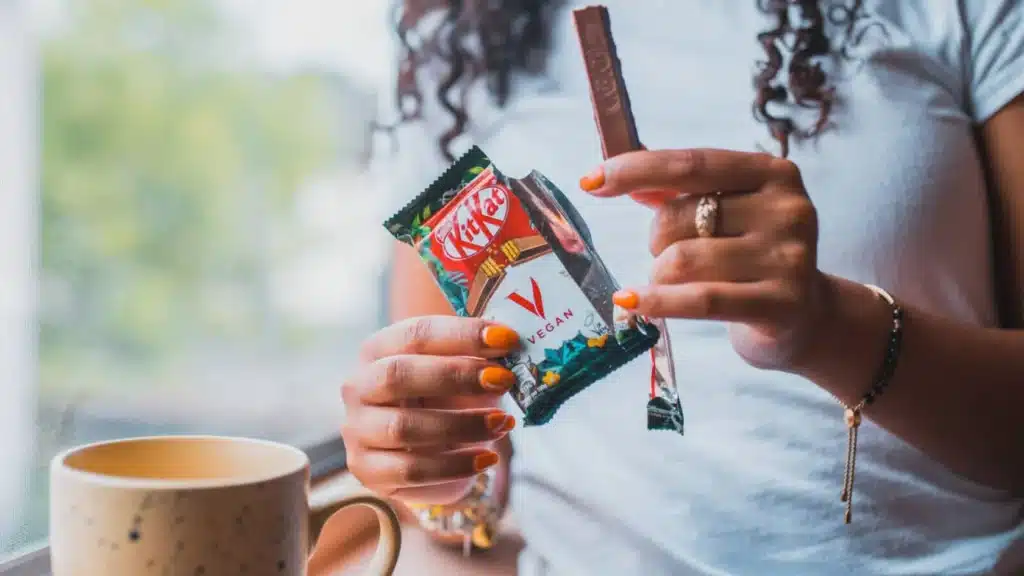
In 2019, German confectioner Katjes, best known for its gummy sweets, filed European patent EP 3,685,673, covering the use of hydrolyzed oat flour to create a creamier texture in vegan chocolate. The technology solves a genuine problem: non-dairy chocolate tends to be grainier and less melt-in-the-mouth than its dairy counterpart. Hydrolyzing the oat milk essentially pre-digests the starches, dramatically improving texture.
When Katjes started enforcing that patent, it went after some of the biggest names in confectionery: Lindt, Nestlé, Barry Callebaut, Casa Luker, and Swiss retailer Coop. In May 2024, a German court ruled that Lindt had infringed the patent, a significant win for a mid-sized challenger taking on a global luxury chocolate brand.
But the big players of the industry did not take the defeat. Instead, they filed an appeal to the European Patent Office (EPO) in March 2025 and won, with the court invalidating the patent entirely. However, the market consequences have already been felt with Nestlé discontinuing its vegan KitKat in nearly all global markets in January 2025. Whether that’s directly attributable to patent uncertainty or broader plant-based market pressures is debated, but the timing is hard to ignore.
What makes this case instructive is the coalition of corporate opponents. Nestlé, Barry Callebaut, and Casa Luker aren’t filing opposition at the EPO out of principle; they’re doing it because challenging a patent now is far cheaper than licensing it (or being forced out of a product category) later. For large food companies, opposition proceedings are just risk management at scale. For smaller players, the calculation is very different.
Prestifilippo offers a counterintuitive read on this dynamic: “A lot of people see this as David vs. Goliath, but in reality, the size of your company shouldn’t determine whether your patent survives. What matters is whether your claims are well-supported and defensible. When the merits are strong, smaller companies can and do win against large corporates. The problem is that broad claims make you a target. When your patent is broad enough to threaten multiple major players’ product lines simultaneously, you invite coordinated opposition—exactly what happened to Katjes. EPO opposition costs are lower than national court litigation, which helps level the playing field, but ultimately, patent disputes are decided on merit. If your science is solid and your claims are defensible, size becomes less relevant.”
Case Study 2 — The Precision Fermentation Showdown: Onego Bio vs. The EVERY Company
 Courtesy: Onego Bio
Back to that collapsed merger. The Onego Bio vs. The EVERY Company dispute is, in many ways, the purest expression of what happens when two companies innovating in the same space race to commercialize and then collide on IP.
Both companies make egg proteins without chickens, using precision fermentation. The EVERY Company uses yeast as its host organism; Onego Bio uses fungus (specifically Trichoderma reesei, a workhorse of industrial biotechnology long pioneered by Onego’s parent organization, VTT Technical Research Centre of Finland). At the center of the dispute is US Patent 12,096,784, which Onego argues broadly covers ovalbumin production methods in ways that extend beyond EVERY’s actual yeast-based process—essentially claiming territory the patent shouldn’t occupy.
Onego filed suit in September 2025, accusing EVERY of patent fraud and describing the claims as “objectively unreasonable.” VTT separately filed an opposition against EVERY’s European patent. As of early 2026, discovery is ongoing.
The merger-that-wasn’t is the real kicker. Court documents revealed that the two companies had discussed a $400 million combination in September 2025. Those talks collapsed, and days later, Onego filed. It’s a vivid illustration that patent disputes are rarely just about technology. They’re about market power, leverage, and what happens when a partnership fails. The EVERY Company holds 63 issued patents with over 100 pending; a portfolio that is both its armor and, potentially, its provocation.
The collapse of this deal also exposes a recurring blind spot in AgriFoodTech M&A. Prestifilippo points to several common failure modes in IP due diligence: “The most common gaps appear in a few places, first of which is ownership issues. Many companies, especially those spun out of universities or research institutions, have messy IP ownership chains where it’s unclear whether the company, the institution, or individual researchers actually own key patents. Second, employee and contractor assignment agreements that don’t properly transfer IP rights to the company. Third, licensed IP, where companies have in-licensed foundational technologies from third parties, but the licenses contain change-of-control provisions that could terminate upon acquisition. And fourth, Freedom to Operate analysis, where a company might own solid patents on its own technology while simultaneously infringing a competitor’s patents.” The Onego/EVERY situation appears to have hit several of these pressure points at once.
Case Study 3 — The Mycoprotein Battle: Better Meat Co. vs. Meati Foods
 Courtesy: Meati
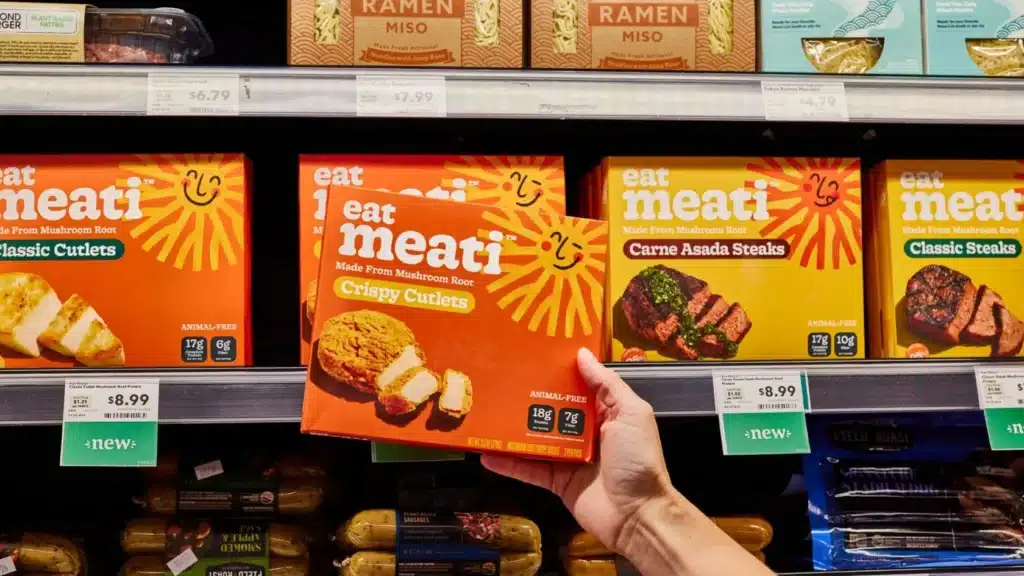
The Better Meat Co. versus Meati Foods dispute ran for two and a half years (from December 2021 to June 2024), and it had all the drama of a proper corporate thriller: a shared scientific origin, a key employee crossing between camps, and a judge who minced no words.
The core issue centered on Augustus Pattillo, a researcher who worked at Argonne National Laboratory alongside the founders of Meati before joining Better Meat Co. and subsequently obtaining a patent for processes used to make textured fungal masses resembling meat. Meati argued prior invention, while Better Meat argued the patent was legitimately its own.
In June 2024, the judge ruled largely in Better Meat Co.’s favor, slamming Meati for “sandbagging” and “shenanigans” in its litigation conduct—unusually blunt language from the bench.
Post-litigation, Better Meat’s picture has improved: the company received FDA GRAS approval in July 2024 and has reportedly reached cost parity with commodity beef. Meati, meanwhile, continues to face challenges after a bank-induced crisis that led to it being sold in 2025, followed by a planned relaunch and refocus in 2026, only to be evicted from its Denver facility and have its assets seized this month due to unpaid taxes.
Case Study 4 — The Mammoth Meatball Controversy: Vow vs. Paleo
 Courtesy: Vow
Some patent disputes have less to do with commercial competition than with who gets to claim the most extraordinary story in FoodTech.
In March 2023, Australian cultivated meat startup Vow unveiled a “mammoth meatball” at Amsterdam’s NEMO Museum, a piece of lab-grown meat made using the woolly mammoth’s myoglobin gene, reconstructed from ancient DNA. It was a stunning publicity moment, deliberately designed to provoke questions about what cultivated meat could be.
Belgian precision fermentation company Paleo wasn’t impressed. The company claimed it had developed mammoth myoglobin technology two years earlier and had patent applications pending that potentially covered myoglobin from mammoth, pig, sheep, cow, chicken, and tuna. That’s an extraordinarily broad sweep of claims.
Vow’s response was pointed: the meatball “was not food” and therefore didn’t fall under food-related patent claims. It also pushed back against what it characterized as a “landgrab” that would stifle innovation across cultivated meat. As of early 2026, Paleo still has no granted patents, with an EPO examiner indicating the application is likely invalid.
The case is a useful lesson in the difference between filing and owning. Pending applications are not the same as granted rights, though companies sometimes behave as if they are.
Case Study 5 — The Plant-Based Burger Wars: Motif FoodWorks vs. Impossible Foods
 Courtesy: Impossible Foods
Not all patent battles begin at the merger table. Some start with a burger.
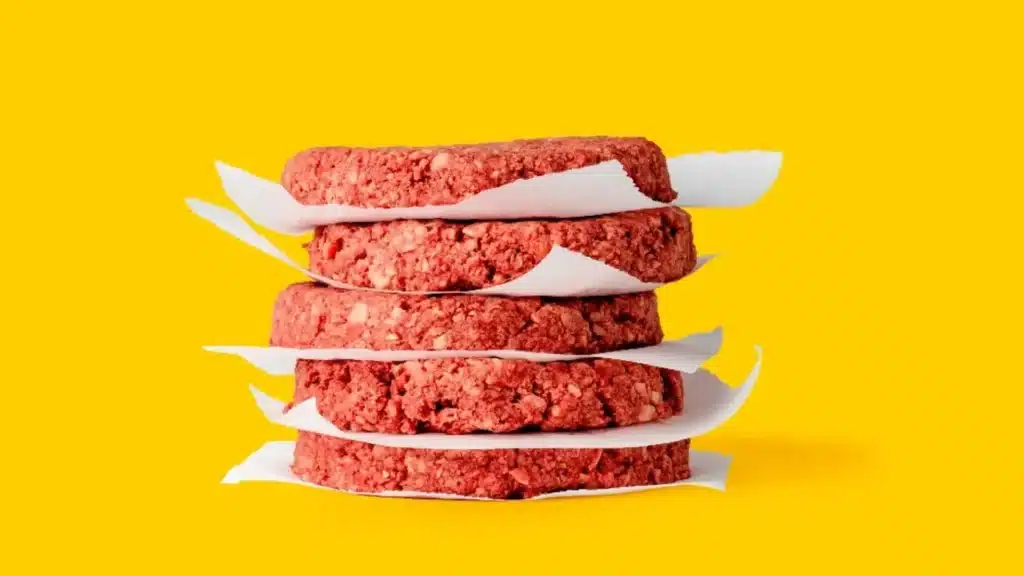
In 2022, Impossible Foods sued Motif FoodWorks, alleging the latter’s HEMAMI ingredient—a heme-like protein designed to give plant-based meat its meaty taste and color—infringed several of Impossible’s patents covering the use of heme proteins to improve the flavor, aroma, and appearance of plant-based foods. Impossible had built its entire brand identity around the “bleeding” burger, powered by leghemoglobin produced via precision fermentation, and it was not going to let a well-funded competitor enter the space without a fight.
Motif hit back hard. Rather than simply defending itself, the company filed inter partes review (IPR) petitions at the United States Patent and Trademark Office (USPTO), challenging the validity of Impossible’s patents, saying the claimed inventions were anticipated by prior art. It was a classic counterpunch: if you can’t design around a patent, try to invalidate it.
The Patent Trial and Appeal Board (PTAB) sided with Motif on several of the challenged claims, finding them unpatentable. Impossible appealed, and the litigation dragged on across multiple proceedings before the parties eventually reached a confidential settlement in 2023. Motif shut down shortly after, citing market conditions, but the IP dispute had consumed significant resources and management attention during a critical period of the company’s growth.
What makes this case particularly instructive is the question of claim breadth. Impossible’s patents covered the use of heme proteins in plant-based meat broadly, not just its own specific leghemoglobin product and production method, but the functional category of using such proteins to improve sensory qualities. That breadth is what made the patents commercially valuable, and what also made them vulnerable to validity challenges. As Prestifilippo explains: “Filing broad patent claims is a common strategy: companies often start broad to establish the widest defensible scope, then narrow the claims during prosecution in response to prior art the examiner surfaces. But overly broad claims are legally vulnerable. If your claims are so broad they cover embodiments that don’t achieve the stated technical effect, they may not survive examination or opposition.” The Motif case is a textbook example of exactly that dynamic playing out in a high-stakes commercial arena.
There is also a structural lesson here about the relationship between IP and funding. Motif raised over $226 million before shutting down. Its investors were betting on both the science and the ability to commercialize without legal obstruction. When a well-capitalized incumbent uses IP to create that obstruction, even a credible technical challenger can be worn down, not necessarily on the merits, but through the sheer cost and distraction of protracted litigation.
What These Battles Are Really Telling Us
The “broad claims” problem is real. When Paleo files patent applications covering myoglobin from six different species, or when The EVERY Company’s claims are described as extending beyond its own production methods, we’re seeing companies attempt to lock up entire technology categories rather than specific innovations. In sectors like smartphones, patent pools have helped manage similar dynamics; FoodTech may eventually need something analogous.
Innovation moves faster than the patent office. All four disputes involve a window of years between filing and resolution; years during which companies are building, scaling, raising, and sometimes failing. The temporal mismatch between biotech innovation and IP adjudication is not a bug in the system. It is the system. And startups need to plan around it.
Regulatory approval and IP protection are separate things. Onego Bio received FDA GRAS approval in September 2025 during an active lawsuit. Better Meat got its FDA approval after winning its case. Vow got Singapore and Australia/NZ approvals. Regulatory greenlight does not mean freedom to operate. Both tracks need to be managed independently.
Funding is not neutral during litigation. The $338 million gap between what Meati and Better Meat raised during their dispute is not a coincidence. Investors price IP risk. Unresolved patent disputes create uncertainty that rational capital avoids or discounts. For founders, IP strategy and fundraising strategy are the same thing.
What You Should Take From This
- For startups: Document everything from day one. Prior art is your best defense, but only if it’s documented. We believe that filing a patent without revenue makes no sense; however, when your revenue starts to come in and you have a solid pipeline of LOIs or JDAs, provisional applications establish priority dates. And write claims that are specific enough to be defensible, not so broad that you invite challenge.
On the cost question, Prestifilippo is direct: “Getting a patent can be expensive, which naturally leads founders to weigh whether that money should go toward IP or other parts of the business. But the cost of not filing is often far greater than the cost of filing, especially in FoodTech where you’re competing not just with other startups but with multinational corporates. In a sector where patent disputes can derail major deals and investor due diligence increasingly expects IP protection, treating patents as something to address ‘later’ is a risk most founders can’t afford to take. Besides, aside from protection, IP also offers a lot of opportunities, such as attracting investments and enabling collaborations.” The cases above illustrate the consequences of finding that out too late. - For investors: IP due diligence is no longer optional. Freedom-to-operate analyses, patent landscape mapping, and understanding litigation history should be standard parts of your process.
- For corporates: The Katjes case shows why opposition proceedings exist. Challenge now or pay later. Before partnerships or acquisitions, freedom-to-operate analyses are essential.
- For the ecosystem: We may be approaching a moment where FoodTech collectively decides what kind of IP culture it wants to build. Does it follow the pharmaceutical model? Or does it need something more collaborative (patent pools, open licensing frameworks) to enable the cross-pollination that food innovation actually requires?
Forward Fooding is the world’s first collaborative platform for the Food & Beverage industry via FoodTech Data Intelligence and Corporate-Startup Collaboration – Learn more about our Consultancy and Scouting Services and our Startup Network.

Gino Prestifilippo is a Patent Attorney at NLO, specialising in European patent prosecution in chemistry, pharma, and AI. His work covers patent drafting, prosecution, and advising on patent strategy across the chemical and life sciences.