This is Edition 03 of the Forward Fooding Novel Ingredients Series, where we go deep on the ingredients we think will define the next decade of food. If you missed them, Edition 01 covered Rubisco and Edition 02 covered rare sugars.
The food industry has been talking about protein for years. Rubisco, precision fermentation, cultivated meat; the innovation story has centred on what gives food its nutritional value. But fat is what gives food its soul. Texture, richness, mouthfeel, structure, melting profile; these are fat’s domain. And right now, the fats that underpin a huge portion of the global food supply are under significant strain.
The fat transition is quieter than the protein transition. There’s no equivalent of the GLP-1 tailwind driving consumer headlines. But the economics are arguably more compelling, and the structural pressures more urgent.
Why Fats and Oils Are a Problem Worth Solving
Let’s start with palm oil. It appears in roughly 50% of consumer packaged goods, from biscuits and margarine to shampoo and lipstick. Global demand is growing at around 4.2% annually, and without dramatic supply chain changes, the world will need an additional 22 million tonnes by 2030, largely at the expense of tropical forests in Southeast Asia, Latin America, and Africa.
That trajectory faces an upcoming regulatory wall, with the EU Deforestation Regulation (EUDR) set to come into force for large operators by the end of 2026, followed by SMEs in June 2027. The law requires companies placing palm oil (and six other forest-risk commodities) on the EU market to prove that their supply is deforestation-free, traceable to exact GPS coordinates, and backed by matching documentation. Non-compliance carries severe financial penalties, including a minimum fine ceiling of 4% of an operator’s total annual EU turnover.
The compliance gap is significant. Only a fraction of current global palm supply carries RSPO certification, and even certified palm faces scrutiny over whether it genuinely meets the EUDR’s traceability requirements. For European food manufacturers, the message is clear: the supply chain that has served them for decades is no longer a safe assumption.
Butter and dairy fats tell a parallel story. Dairy fat prices have risen alongside whey over the same period of GLP-1 adoption and supply chain stress. The upstream dynamics are the same: constrained production capacity, surging demand, and a structural inability to scale quickly.
None of this is a temporary blip. These are systemic vulnerabilities in ingredient categories that are genuinely difficult to replace. Unlike protein, fat cannot be swapped out with a cleaner amino acid profile. It determines how a product feels in the mouth, whether a chocolate snaps cleanly, whether a croissant achieves the right lamination, whether a plant-based burger approximates the real thing. Getting fat right is one of the harder formulation challenges in food. And that is precisely what makes the emerging alternative fat landscape so compelling.
What Are Novel Fats and Oils?
At a technical level, fats and oils are triglycerides. Their function in food, whether they stay solid at room temperature, melt at body temperature, emulsify, or add crunch, is determined by chain length and the degree of saturation of their fatty acids. Palm oil works in so many applications because its mid-fraction has a melting profile that perfectly suits confectionery and bakery. Butter works because of its specific fatty acid composition and crystalline structure. These are not trivial properties to replicate.
Conventional fat sources, like palm, soy, coconut, and dairy, are all land-intensive and, to varying degrees, supply-constrained. The innovation now underway aims to decouple fat production from agriculture entirely.
Three technology routes are being pursued in parallel:
Fermentation-based fats use oleaginous (fat-accumulating) yeasts or fungi, fed on agricultural side streams and food waste, to produce oils that mirror the fatty acid profiles of palm or coconut. The feedstock is circular, the production is domestic, and the output is functionally equivalent.
Thermochemical conversion takes a more radical departure from biology. By applying heat and pressure to CO2, green hydrogen, or methane (inputs with no agricultural footprint at all), companies are producing fatty acids that are chemically identical to those found in conventional fats. This is essentially the chemistry of deep-sea hydrothermal vents, applied at commercial scale.
Precision fermentation engineers microorganisms to produce designer lipid profiles: cocoa butter equivalents, sn-2 palmitate for infant formula, animal-like fats with specific flavour compounds. The fatty acid composition can be specified in advance, rather than accepted as the output of a particular crop.
Each route has different scale economics, regulatory pathways, and commercial timelines. Together, they constitute a genuine alternative to the existing fat supply chain.
The Commercial Landscape
 Courtesy: Savor
We track 74 companies in the Oil & Fat Analogs category on the FoodTech Data Navigator, with total funding across the ecosystem exceeding $804M. Here is where the leading players stand today.
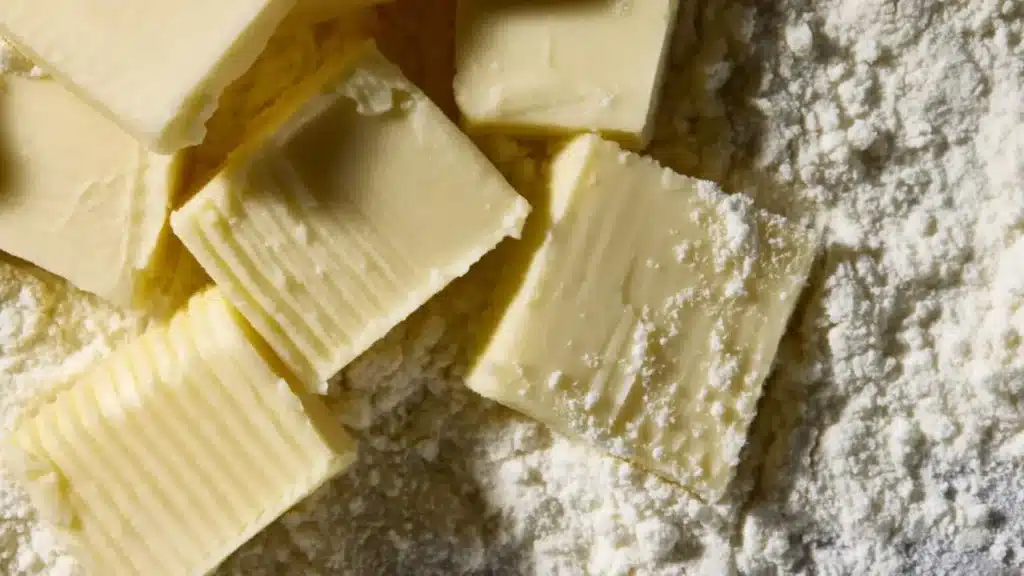
Savor (San Jose, US) is the category’s most high-profile company and, as of July 2026, its clearest signal to the corporate world. Its technology converts CO2, green hydrogen, and methane directly into fatty acids, entirely outside of agriculture. Its flagship product, EcoButter, has already been commercialised in San Francisco, served in chocolate truffles at Michelin restaurant One65, and in baked goods at Jane the Bakery, where bonbon samples sold out in under an hour.
On July 9 2026, Savor announced a $32M financing round, alongside a two-year strategic collaboration agreement with Swedish specialty fats giant AAK, which covers joint development for dairy alternative and bakery applications, and includes the latter’s equity stake in the company. This is the clearest signal the sector has seen: a 150-year-old specialty fats incumbent making its first bet on carbon-derived fat.
Savor has self-affirmed Generally Recognized As Safe (GRAS) status, which enables commercial sales, and an FDA “No Questions” letter is anticipated in late 2026 or early 2027. Total funding: ~$65M
NoPalm Ingredients (Wageningen, Netherlands) is the leading European player in fermentation-derived palm alternatives. The company uses non-GMO yeasts fed on agricultural side streams, like potato peels and whey permeate, to produce yeast oils that are functionally equivalent to palm fractions. Its REVÓLEO brand has two expressions: Revóleo Soft for food applications and Revóleo Silk for cosmetics.
In September 2025, NoPalm announced its first demonstration factory in partnership with NIZO Food Research, located at the Food Innovation Campus in Ede; the first industrial-scale yeast oil facility of its kind, with capacity set to reach 1,200 tonnes per year. First production is expected in H2 2026.
The company has already reached 120,000L of production volume with a contract manufacturer, and its partner list is notable: Unilever, Colgate-Palmolive, Zeelandia, and Those Vegan Cowboys. A particularly elegant circular case: NoPalm’s partnership with Belgian dairy cooperative Milcobel uses whey permeate as the feedstock to produce a palm oil alternative. Total funding: €12.5M
Clean Food Group (London, UK) is developing a B2B fermentation platform to replace multiple fats simultaneously, including palm, cocoa butter, milk fat, and soybean oil, using yeast and bacteria. Its focus is a single platform serving several of the most supply-constrained fat categories at once, and its European positioning puts it squarely in the path of EUDR demand.
The company acquired an R&D facility in Liverpool in 2025 and is expanding commercial trials with European food manufacturers. Total funding: £15.5M
Checkerspot (Alameda, US) takes a precision fermentation approach, using microalgae, to design high-value lipids for food, nutrition, and biomaterials. In October 2025, the company announced a partnership with Huvepharma to commercialise a high sn-2 palmitate algal oil, a precision alternative to palm-derived nutritional oil that mimics human milk fat, at industrial scale. This is a meaningful infant formula play: sn-2 palmitate is the dominant fatty acid in human breast milk, and replicating it without palm is a significant nutritional and regulatory opportunity.
In April 2026, Checkerspot launched Algolein, a cosmetics oil line developed with AAK’s La Fabrique Végétale, and published an omega-7 fermentation breakthrough. Total funding: $115.8M
ÄIO (Tallinn, Estonia) is a deep-tech precision fermentation platform producing microbial oils positioned as climate-positive alternatives to palm, coconut, and animal fats. With strong positioning for the EUDR compliance wave and active EU market entry, it represents the Estonian biotech ecosystem’s contribution to the category. Total funding: $12.7M
 Courtesy: Melt&Marble
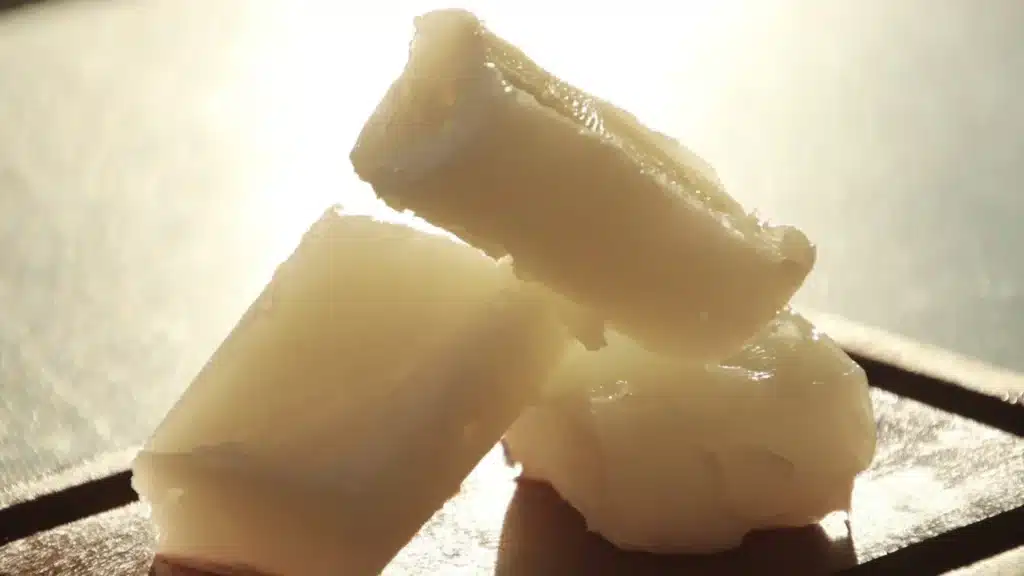
Melt & Marble (Gothenburg, Sweden) uses engineered yeast to produce designer fats with bespoke fatty acid profiles, targeting dairy and confectionery applications. The ability to specify the output composition rather than working with whatever a crop delivers is the precision fermentation advantage, and Melt & Marble is advancing ingredient commercialization with European food manufacturers. Total funding: $22.7M
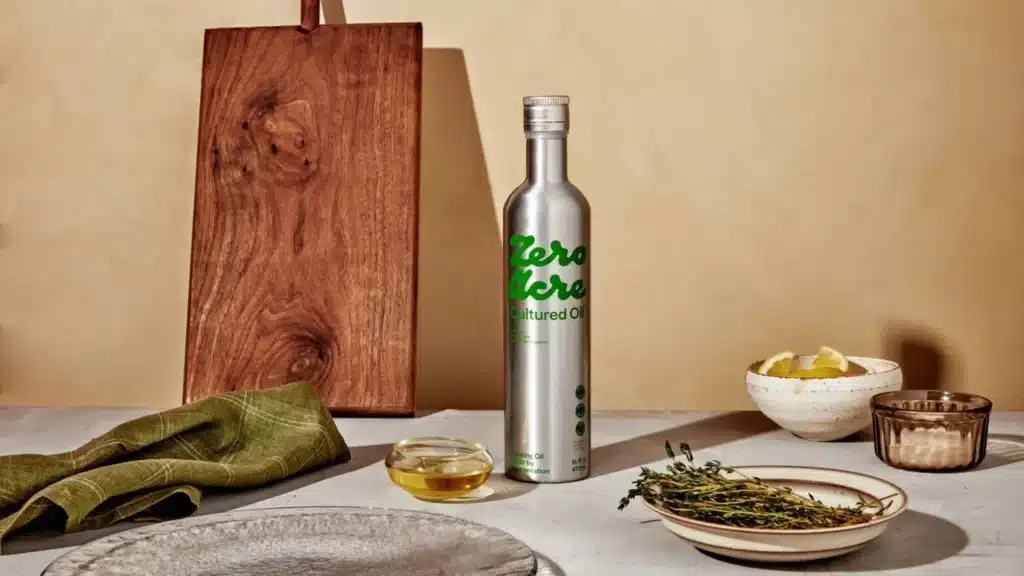
Zero Acre Farms (Woodside, US) ferments sugars to produce cooking oils positioned as a direct replacement for seed oils. Its timing is well-suited to the current consumer moment: the seed oil backlash, driven by health-conscious consumers and amplified by the GLP-1 usage wave, has created genuine demand for alternatives. Zero Acre is expanding retail distribution into that tailwind. Total funding: $41.7M
Nourish Ingredients (Canberra, Australia) uses precision fermentation to produce animal-like fat molecules with authentic flavour compounds, targeting the specific challenge of plant-based meat and dairy, where the absence of real fat is typically the most obvious sensory deficit.
The company is currently scaling commercial production and building CPG partnerships. Total funding: $48.8M
Hoxton Farms (London, UK) takes a cultivated approach: growing fat from animal stem cells in modular bioreactor clusters, then hybridising with plant-based meat products. This is the most biologically faithful route to animal fat without the animal, and Hoxton is actively partnering with plant-based meat brands to bring it to market. Total funding: $29.9M
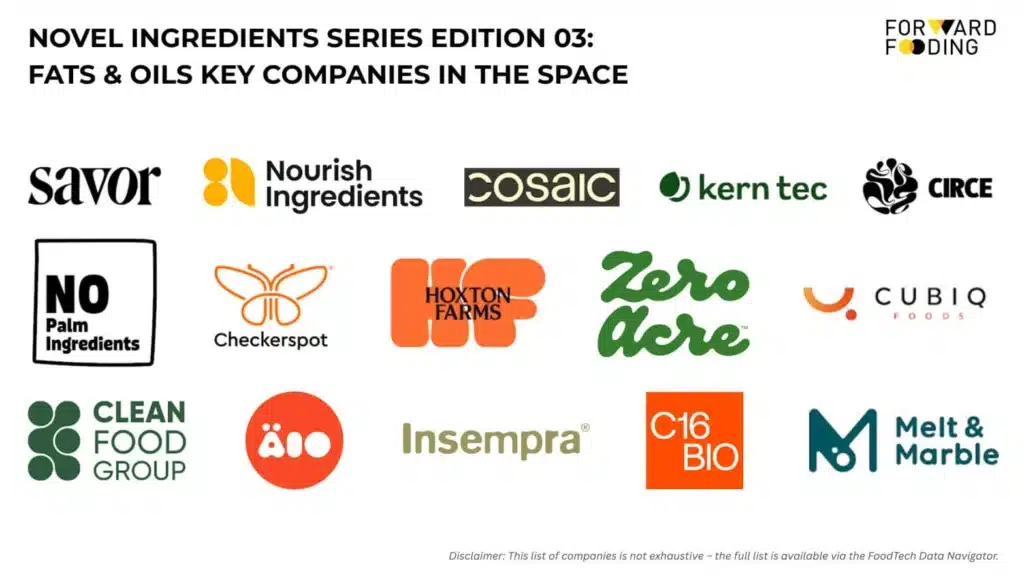
Beyond these nine, the FoodTech Data Navigator ecosystem includes Cosaic (oleaginous yeast for plant-based dairy creaminess), Cubiq Foods (cell-based structured fats), C16 Biosciences (palm alternative targeting personal care), Insempra (nature-inspired lipids via fermentation), Kern Tec (upcycled fruit seed oils), Circe (agriculture-free fat from CO2 and electricity), and dozens more at earlier stages. This is a category, not a collection of experiments.
The Investment and Strategic Timing Case
We’ve been watching this space closely. The reasons the window is open now are specific and time-sensitive.
EUDR compliance is an immediate commercial driver, not a future risk. Enforcement for large operators will begin at the end of 2026. For European food manufacturers that rely on palm oil, the compliance burden is real, ongoing, and getting harder. Novel fats that are domestically produced and agriculture-free sidestep the EUDR entirely: they are structurally compliant, not just certified. NoPalm’s CEO Lars Langhout has been explicit: European customers are already approaching them not just for sustainability credentials, but for regulatory escape velocity.
The AAK-Savor deal is the category’s clearest corporate signal. When a specialty fats incumbent with 150 years of history takes an equity stake in a carbon-to-fat startup and signs a two-year joint development agreement, it is making a supply chain bet. AAK’s global head of R&D, Kim Olofsson, described the partnership as opening “a new source of saturated fats, decoupled from agriculture and traditional supply chains.” That is the kind of language that precedes procurement decisions, not press releases.
The $70B palm oil industry has no green alternative at scale yet. That is a market opportunity of unusual size. Novel fats companies are not entering a crowded category fighting for share; they are building the only viable alternative to an ingredient facing structural regulatory and reputational pressure.
Designer fat capabilities unlock premium reformulation. Precision fermentation can produce cocoa butter equivalents, infant formula lipids, and animal-authentic fat compounds; categories where the performance bar is exceptionally high and the willingness to pay a premium is real. This is ingredient innovation across confectionery, infant nutrition, plant-based meat, and dairy.
GLP-1 adoption and the seed oil backlash are converging tailwinds. Consumer interest in fat quality, not just fat quantity, is growing. Zero Acre’s expansion is riding genuine retail demand. The same wave of nutritional attention that drove the protein surge is beginning to reach fats.
Novel Fats Applications in Commercial or Near-Commercial Use
 Courtesy: Zero Acre Farms
- Butter and dairy alternatives: bakery, confectionery, spreads; Savor’s EcoButter already in commercial foodservice
- Palm oil replacement: processed food, personal care, cosmetics; NoPalm’s REVÓLEO already with major CPG partners
- Cocoa butter equivalent: chocolate and confectionery; Sun Bear Biofuture, Melt & Marble, Nourish Ingredients, and Checkerspot all targeting this
- Infant formula: sn-2 palmitate analog; Checkerspot x Huvepharma partnership at industrial scale
- Plant-based meat fat marbling: authentic flavour and texture; Hoxton Farms, Nourish Ingredients, Lypid
- Dairy alternatives: ice cream, cheese; Cosaic and Yali Bio targeting plant-based dairy creaminess
- Cooking oils: Zero Acre Farms replacing seed oils in retail
- Personal care and cosmetics: C16 Biosciences, Checkerspot’s Algolein line, NoPalm’s Revóleo Silk
A Note of Caution
We are tracking this category with genuine conviction, but intellectual honesty requires flagging where the story is not yet complete.
Scale and cost parity remain unproven at commercial volumes. Demo factories and pilot lines are different from full commercial production. The NIZO demonstration plant will be a genuine industry milestone when it reaches 1,200 tonnes per year, but that is still a small fraction of global palm demand. For most of these companies, the B2B ingredient play is a longer-horizon bet than the timeline sometimes implied by fundraising announcements.
The REAL Butter Act, introduced recently by US legislators and specifically targeting Savor’s EcoButter labelling, is worth noting. Novel categories attract regulatory attention, and sometimes hostility, once they become commercially visible. The protein sector has navigated this in cultivated meat; the fat sector will face its version too.
None of this undermines the opportunity. It does argue for engaging early and building relationships before scale is proven, rather than waiting for the risk to be fully resolved; by which point the advantageous positions will already be taken.
The Question for Corporates
The fat transition does not have the consumer visibility of protein. There is no GLP-1 equivalent driving palm oil to the front page. But the structural case is arguably stronger: a regulatory compliance crisis (EUDR), a supply chain exposed to tropical weather and deforestation pressure, and a $70B market with no clean alternative at scale.
The companies and corporates that get ahead of EUDR, the palm supply crunch, and butter price volatility over the next 12 to 24 months will have a formulation advantage that takes years to replicate. AAK understood that when it took its Savor stake. The question for everyone else is when, not whether.
Want to explore the full landscape? Book a demo on the FoodTech Data Navigator to map 74 novel fat and oil companies, track funding by stage and technology route, and identify partnership or M&A targets before the EUDR window closes.
Building in this space? Apply to the FoodTech 500 to get in front of corporates and investors actively watching this category. Follow us, come to our events, and subscribe to the newsletter — Edition 04 of the Novel Ingredients Series is already in progress.
Forward Fooding is the world’s first collaborative platform for the Food & Beverage industry via FoodTech Data Intelligence and Corporate-Startup Collaboration – Learn more about our Consultancy and Scouting Services and our Startup Network.