
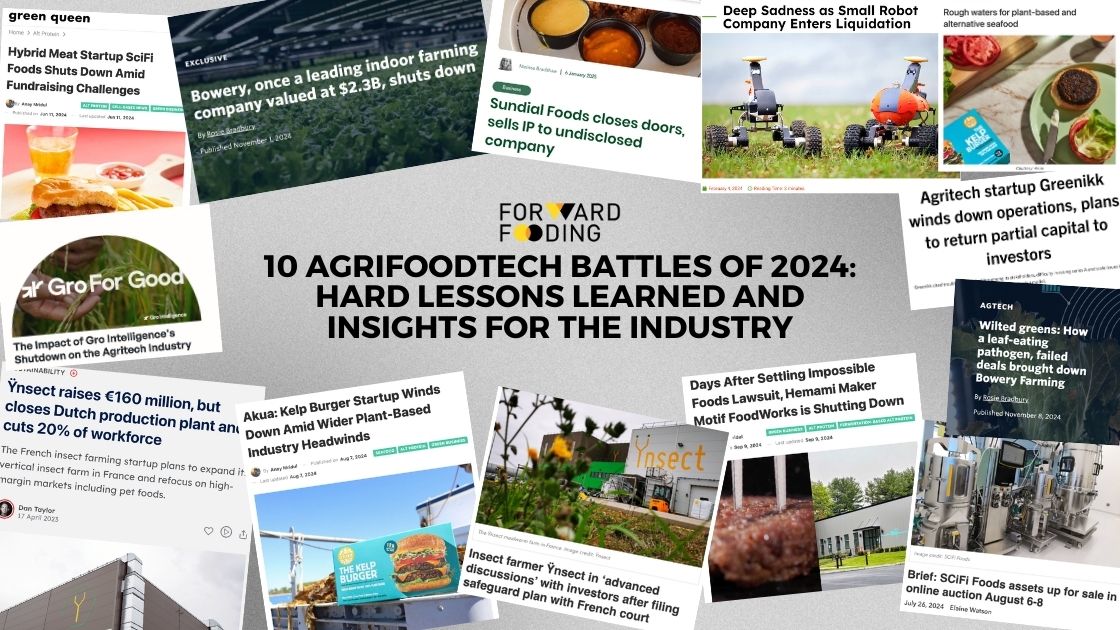
The AgriFoodTech sector had a tough year in 2024, facing unprecedented challenges that continue to reshape the industry landscape. Investments plummeted, the economy slumped, and the industry continue to face regulatory hurdles, let alone the complexity of addressing changing consumer needs that even the most promising startups are grappling with a harsh new reality. Some companies that were once at the top of their game succumbed to the economic downturn. We looked into AgriFoodTech’s toughest battles of 2024, what’s behind these failures, and what are the key learnings to help guide the industry’s future.
A Look at Some of the Main AgriFoodTech Startup Struggles of 2024
AgriFoodTech startups need to navigate a handful of hurdles and restrictions they usually don’t have control over. Although some founders were able to keep their business going by making necessary adjustments and even sacrifices just to keep their business going, some other businesses weren’t so lucky. While we think it’s important to ‘celebrate’ the world’s AgriFoodTech entrepreneurial talent and raise awareness about the solutions these companies have built, we acknowledge not all ventures will be successful. When closure is the last or only resort, we strongly believe some important lessons can be drawn to help other entrepreneurs and industry professionals to take advantage of them to understand what went wrong
Here are some of the companies in the sector that ceased operations or faced unprecedented challenges in 2024:
Bowery
Founded: 2015
Total Funding: Raised $700M in venture capital from notable organizations like General Catalyst, GV, and Temasek, as well as A-listers Natalie Portman, Justin Timberlake, and Lewis Hamilton.
Innovation: Used controlled environment techniques to grow pesticide-free vegetables and herbs, such as lettuce, kale, and basil.
Milestones:
- Supplied fresh produce to major retailers at over 850 locations, including Whole Foods, Walmart, Albertsons, and Giant Food, as well as e-commerce retailers like Amazon and Hungryroot.
- 2021: Made headlines after securing $300M in a Series C round led by Fidelity, valuing the company at $2.3B—the highest for an indoor farm startup.
- Opened Farm X in New Jersey to scale R&D and the cultivation of new crops.
- 2022: Opened a commercial smart farm in Pennsylvania.
- Acquired California-based robotics startup Traptic to add strawberries to its offering.
Challenges:
- 2023: Laid off employees and delayed opening new facilities in Texas and Georgia to cut costs.
- In May, the company was hit by the pathogen phytophthora, wiping out vast amounts of its produce and spreading to its other facilities.
- Bowery invested in building separate irrigation systems to isolate the phytophthora, but to no avail.
Closure: The company could not sell any of the produce exposed to the pathogen, and its yield dramatically decreased, resulting in distributors ending their partnership with the vertical farm giant. Bowery tried to secure financing or reach a deal to sell the company, but it was unsuccessful. In November 2024, it closed its doors, laying off 187 workers.
Ÿnsect
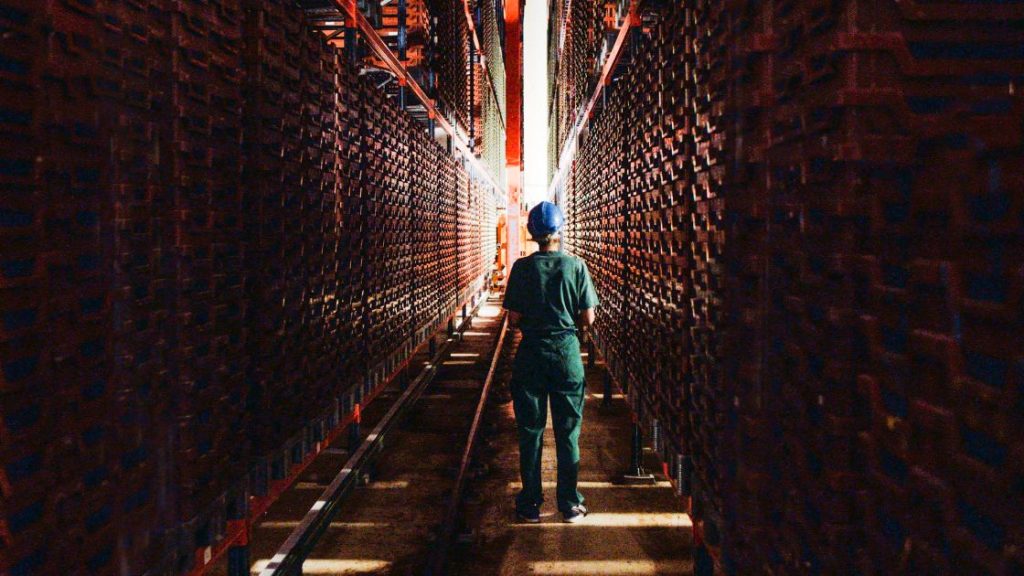
Courtesy: Ynsect
Founded: 2011
Total Funding: Raised almost $580M in funding from investors, including Astanor and Robert Downey Jr.’s Footprint Coalition, as well as from French government sources like Bpifrance and Caisse des Dépôts.
Innovation: Uses AI and robotics to operate large-scale insect farms to transform mealworms into organic fertilizer and protein powder for animal feed and human consumption.
Milestones:
- 2020: Announced plan to build Ÿnfarm—a 45,000m2 facility in Amiens, France, to produce up to 200,000 tonnes of ingredients annually.
- Raised $372M in a Series C, upgrading it to unicorn status.
- 2023: Secured $175M in 2023 to further finance the construction of its plant.
- Launched its new B2B2C brand, Sprÿng, for the pet food market in May.
- 2024: Operations at the completed Ÿnfarm started to meet the $200 million worth of contracts with new and existing clients.
- Earned regulatory approval from the Association of American Feed Control Officials to sell its Protein70 ingredient for use in dog food.
Challenges:
- Faced financial problems due to rising energy and raw materials costs and limited capital.
- Closed down its Netherlands facility, which was part of its Protifarm acquisition in 2021, laying off thirty-five employees
- Laid off 38 other roles in its Paris headquarters.
Closure: In September 2024, after struggling to secure funding for its expansion plans, Ÿnsect filed a safeguard plan with a French commercial court to oversee its reorganization as operations continue, jobs are kept, and debts are paid.
SciFi Foods
Founded: 2019
Total Funding: Raised over $40M from leading firms like Andreessen Horowitz, Valor Siren Ventures, BoxGroup, and the rock band Coldplay.
Innovation: Uses synthetic biology to combine cultivated beef cells with plant-based ingredients to create a hybrid meat that delivers on taste at lower manufacturing costs.
Milestones:
- 2022: Emerged from stealth after closing a $22M Series A round.
- Announced building a pilot facility in the Bay Area, where beef cell lines would be grown in serum-free media using single-cell suspension techniques to make its hybrid burgers more affordable by just $10 apiece.
- Ohio State University’s life cycle assessment of SciFi Foods’ hybrid burger found that the meat analog generates 87% less emissions and requires 39% less energy, 90% less land use, and 96% less water use than conventional beef patties.
- 2023: Opened its pilot plant in California to produce massive amounts of its hybrid burger as it prepared to apply for FDA/USA regulatory approval.
- Produced its cell-cultured beef at a commercial scale in a 500-liter bioreactor at its newly opened facility.
Closure: In June 2024, the company announced its shutdown after its unsuccessful attempt at securing additional funding to scale its product and reach price parity. It appointed an advisory firm to facilitate the sale of its assets.
SciFi Foods co-founders Joshua March and Dr. Kasia Gora have released a guide to a graceful exit for startups finding themselves toward the inevitable end of their journey.
Ordinary Seafood
Founded: 2022
Total Funding: Raised $2.5M over three rounds
Innovation: Developed a portfolio of three innovative products: plant-based tuna, smoked salmon, and shrimp
Milestone: In 2023, its plant-based products became available at METRO outlets across Germany and sold through various food service providers like Chefs Culinar, Nordic Food Service, Frischdienst, and Vegilife.
Closure: In February 2024, Pluschke announced that Ordinary Seafood was forced to cease operations after struggling to secure the necessary capital to sustain its operations.
Sundial Foods
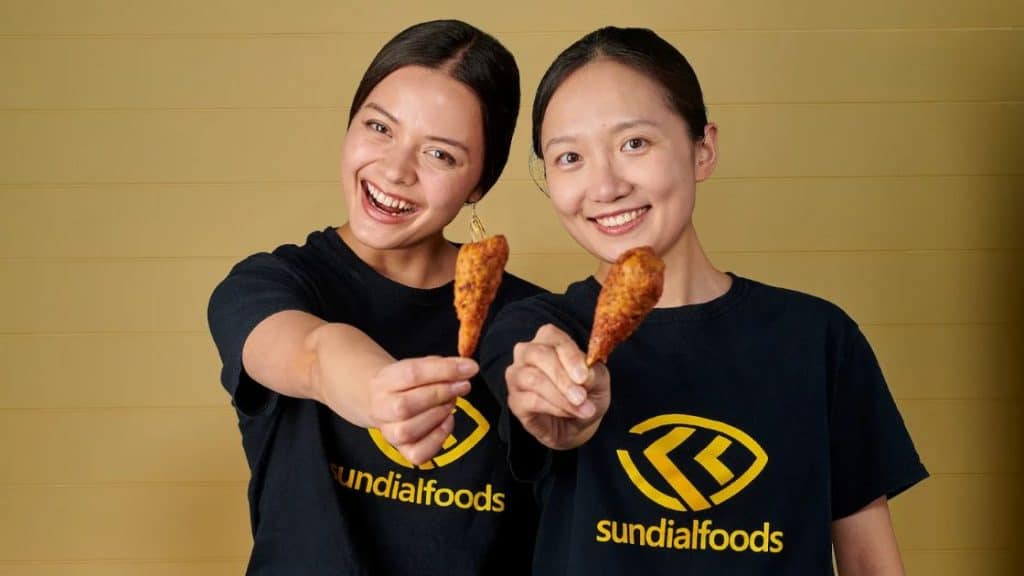 Courtesy: Sundial Foods
Founded: 2019
Total Funding: Raised a total of $4M from investors like Nestlé
Innovation: Produces vegan chicken with skin and bone
Milestones:
- 2020: Participated in Nestlé’s R&D Accelerator program
- Co-branded a product with Nestlé’s Garden Gourmet, which launched in over 40 retail stores in Switzerland
- 2021: Secured $4M in a seed round headed by Nestlé
- 2022: Launched its plant-based chicken wings in numerous New York and San Francisco restaurants.
- 2024: Received $5,000 in grant from the Startup302 competition.
Closure: In December 2024, Sundial filed for dissolution as CEO Jessica Schwabach mentioned having to face a challenging fundraising environment. Meanwhile, its IP has been sold to an undisclosed large European company.
Akua
Founded: 2017
Total Funding: Raised approximately $5.4M through various funding rounds from notable investors like Vibrant Ventures
Innovation: Produced kelp-based products, including jerky, burger, protein balls, and crab cakes
Milestones:
- 2019: Launched its first product, Kelp Jerky, on Earth Day.
- 2020-2021: Launched a crowdfunding campaign and raised $1,070,000
- 2021: Secured $3.2M in a seed round led by Vibrant Ventures.
- Expanded its product range with the launch of the Kelp Burger, Kelp Protein Balls, and other equally innovative products.
- 2022: Diversifies its product portfolio with the introduction of the Kelp-based Crab Cakes
- Akua’s products were not just available at retailers and online platforms but also at renowned establishments like Erewhon, Vons, Pavilions, PLNT Burger, and Hula’s Island Grill.
- 2023: Scaled its Kelp Burgers into over 1,000 retail stores and secured over 100 food service customers across the U.S.
Closure: Despite initial success and positive customer feedback, Akua faced significant challenges, including slim profit margins, logistical issues, tight competition, and having their products copied by a supply chain partner. In August 2024, Akua officially ceased operations and put up for sale its remaining products.
Motif FoodWorks
Founded: 2019
Total Funding: Raised $345M from investors like Breakthrough Energy Ventures, Fonterra, and Bill Gates
Innovation: Uses biotechnology and fermentation to provide alternative protein product lines that deliver the same functionality, taste, and nutrition as their animal-based counterparts
Milestones:
- 2021: Opened a 10,600 sqft R&D facility in Boston and raised $226M in a Series B round.
- 2022: Unveiled another 65,000 sqft lab called Motif’s Plant Base.
- Produced three innovative products:


GET IN TOUCH
If you have any questions or suggestions, we’d love to hear from you!

Forward Fooding is the world’s first collaborative platform fostering innovation via FoodTech data intelligence & corporate-startup collaboration.
About
Resources
Company
Copyright ⓒ 2026 – All rights reserved. Forward Fooding Ltd
Made with 🫶 for Advancing the Food System.
