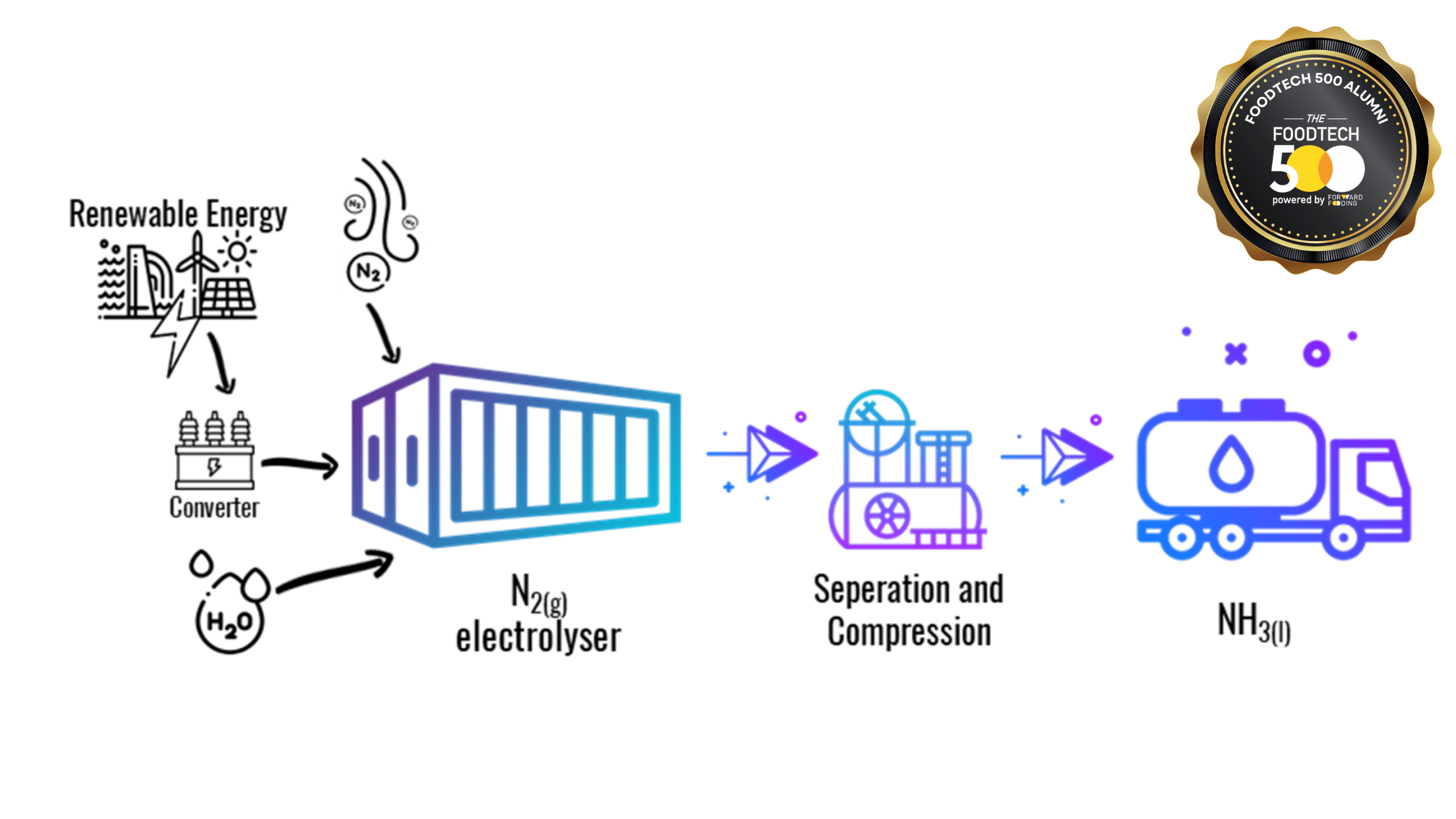
The global fertilizer supply chain is incredibly fragile. For over a century, ammonia production has relied on massive, centralized facilities that consume vast amounts of fossil fuels. This leaves rural communities and farmers at the mercy of the global commodity markets, volatile prices, and massive carbon footprints.
Stepping up to reinvent this broken system is Atmonia. The company is building a distributed and sustainable ammonia production process that runs entirely on electricity, water, and air. In October, the team demonstrated a first-of-kind nitrogen electrolyzer, a milestone that coincided with closing a pre-seed investment round and securing an EIC-Transition grant to push the technology forward.
Shifting From Centralized Production to Local Independence
The current model is struggling. And that’s because the historic Haber-Bosch process requires large quantities of natural gas. It is used both as an energy source, creating a high-temperature and high-pressure system, and to provide the Hydrogen to complete the reaction. The centralized approach means large quantities of ammonia must be shipped across the globe before it ever reaches a farm, adding cost, risk, and emissions.
Atmonia wants to change that dynamic completely. By moving production directly to the end user, the company shortens the value chain drastically. As the energy transition continues, an increasing proportion of farmers are generating their own renewable electricity using solar panels and wind turbines. The Atmonia process is the logical next step. It lets farming communities use intermittent renewable electricity to produce ammonia right on-site.
“I want to ensure global food security without compromise,” Atmonia’s CEO, Helga Dögg Flosadóttir, states. This means building resilience into the system at the ground level. A distributed model removes the cost and carbon tied to transportation. It gives farmers unprecedented independence in an ever-changing environment.
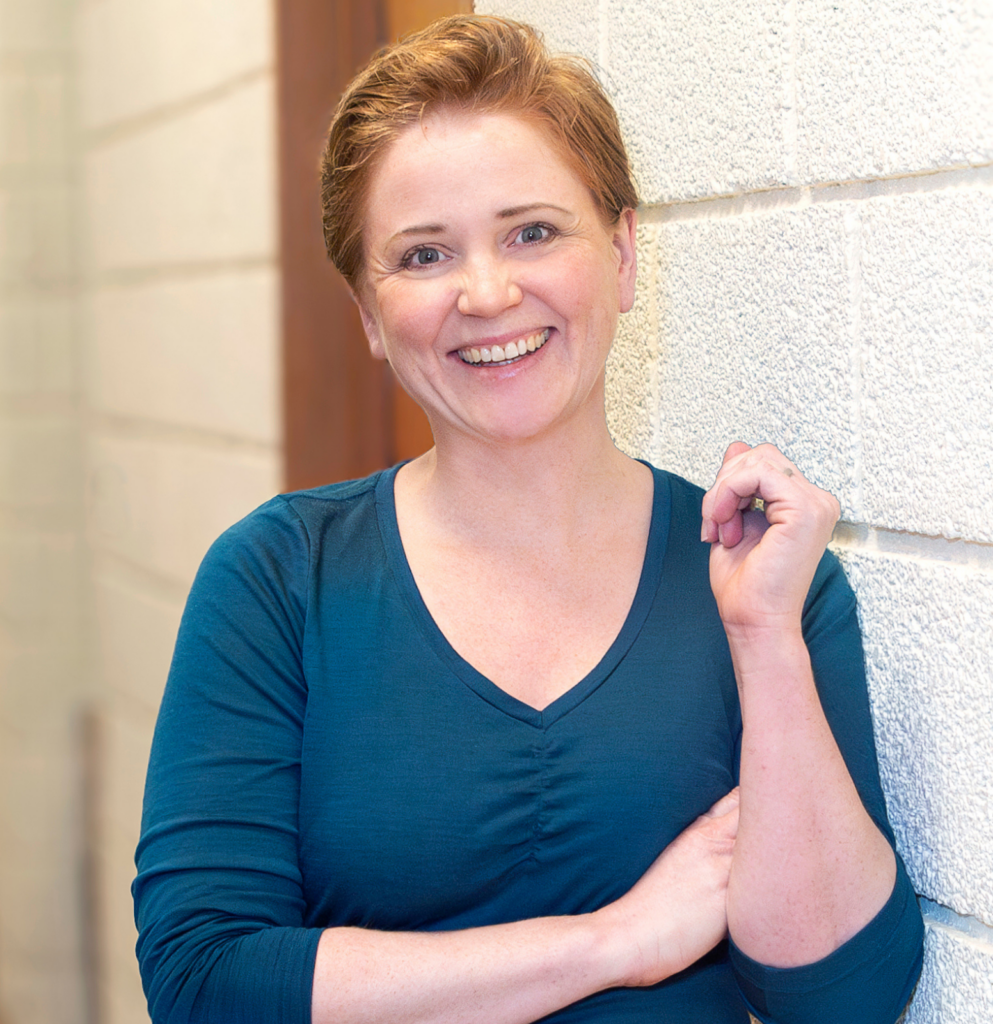
Atmonia CEO, Helga Dögg Flosadóttir
Cracking the Science of Room-Temperature Ammonia
Making ammonia from air and water at room temperature sounds like magic. But the core of it is a patented catalyst and an aqueous electrolyzer. The system uses only electricity to produce ammonia directly from atmospheric nitrogen and water, releasing zero CO2 emissions.
The unglamorous part of this breakthrough is proving it actually works. In the nitrogen reduction field, a massive challenge has always been proving that the ammonia you detect actually came from your nitrogen feed, and not just from background contamination in the lab. Atmonia tackled this head-on in October.
They ran their demonstration in a 10 cm² electrolyzer using 15N-isotope labelling. This provided definitive, undeniable confirmation that the ammonia was real. The experiment was independently reproduced across three separate laboratories. “Atmonia’s technology has the lowest theoretical energy cost per kg of ammonia – have the potential to replace Haber-Bosch based on efficiency,” the company’s leadership emphasizes.
To get the energy demand down to an economically competitive level, the team is not relying on guesswork. They are turning to machine learning. Using Design of Experiments, they will compile data from different variable compositions like temperature, pressure, and pH. This data will feed into a Bayesian model to predict the energy consumption minima. The goal is to trace their way through a multidimensional optimization space in as few experiments as possible, targeting 40 MWh per tonne.
They are not doing this alone. A partnership with Fujitsu combined neural-network training with high-performance computing. This allowed Atmonia to run high-speed quantum-chemical calculations to screen candidate catalyst materials computationally. It accelerated their theoretical studies massively, helping them narrow a vast search space down to the exact catalyst behind their current cell.
Scaling Hardware Without the Hype
Building a new physical system from scratch means scaling up only when the technology is truly ready. Looking at the landscape of failed startups in this space, Atmonia’s strategy is clear: keep a small core team with deep knowledge to reach the milestone before scaling.
“We will not exaggerate our technology development milestones,” the team notes. “We are proud of where we are today and do not need to pretend to be further along.”
With the pre-seed round and EIC-Transition grant secured, the roadmap is set. The funding sustains partnerships with VITO, TEGA, EcoVibes, and the Agricultural University of Iceland. The immediate milestones are core technology development, energy demand optimization and scaling the cell from the validated 10 cm² up to a 400 cm² cell, and running a small-scale on-farm trial.
There are hurdles, of course. Small-scale ammonia production does not exist today, which means regulatory permits have not been written. Atmonia is already working to develop a permit pathway within their first markets to simplify uptake.
At World Agri-Tech London, the company will begin inviting investors into a seed round. This round is about acceleration. Moving from a validated cell to a field-proven, deployable system.
When asked to imagine a headline ten years from now, the vision is focused on impact, not just technology. Atmonia’s CEO envisions: “Fertilizer harvested from the air – creating fertilizer security for farmers.”
Visit Atmonia to learn more about their distributed ammonia production technology.
Forward Fooding is the world’s first collaborative platform for the Food & Beverage industry via FoodTech Data Intelligence and Corporate-Startup Collaboration — Learn more about our Consultancy and Scouting Services and our Startup Network.