Failed reformulations are the most expensive thing in food. Nobody can see them. They leave no audit trail, no postmortem, and no line item. R&D infrastructure stays structurally underfunded because the cost of being slow or wrong gets buried in next quarter’s launch slate. It is why challenger brands keep getting there first.
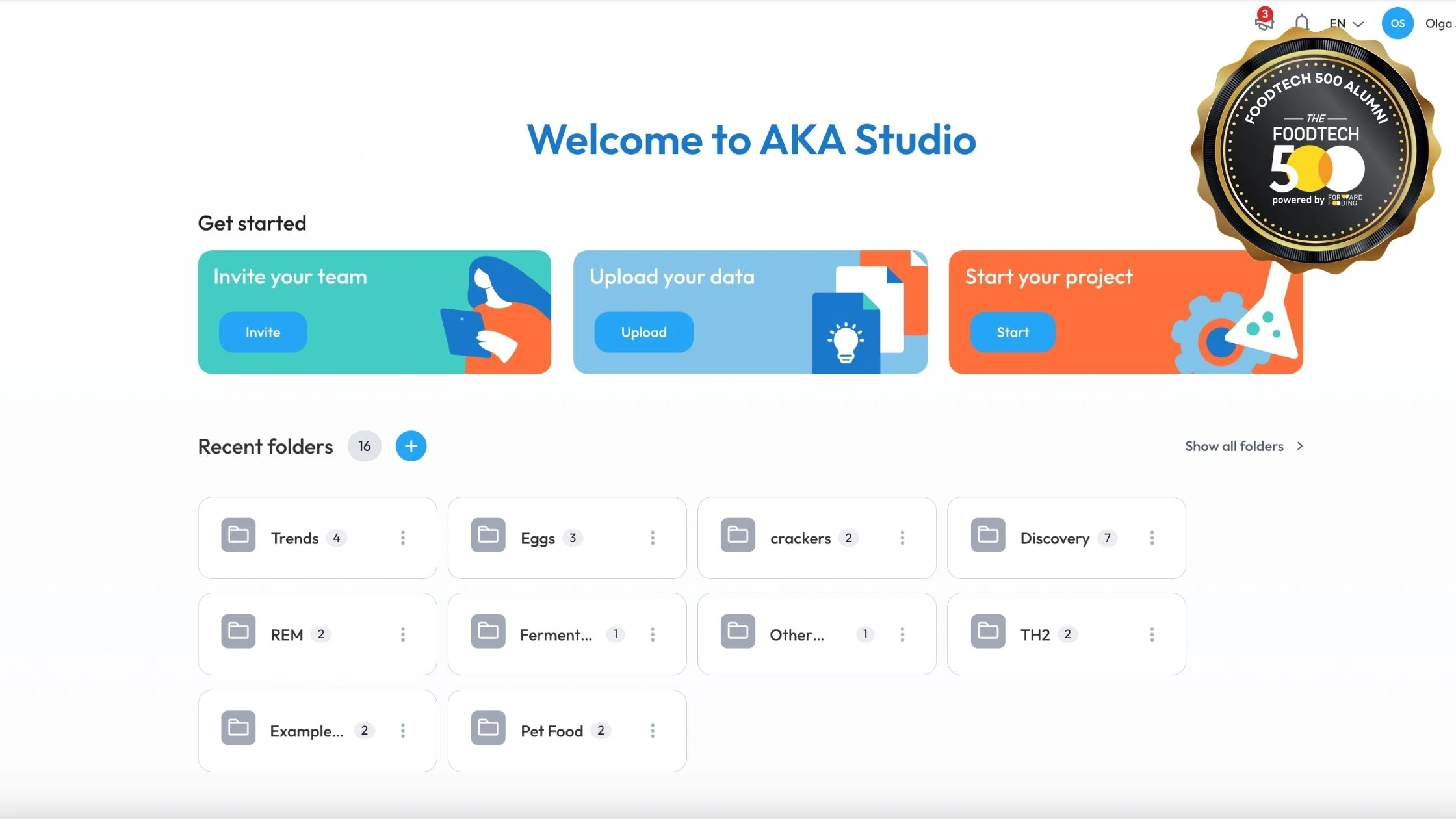
Enter AKA Foods. Founded by David Sack, the company is bringing artificial intelligence into the spaces that need it most. Its proprietary platform, AKA Studio, combines AI with real human sensory data to accelerate research and development. Unlike generic tools, it integrates a company’s tacit knowledge into a private and secure system.
Stepping up to solve the industry’s hidden bottlenecks, AKA Studio enables food companies to shorten development cycles and reduce reformulation costs. We sat down with David Sack, Co-founder and CEO, to discuss institutional knowledge loss, private AI architecture, and building the default operating system for food R&D.
Since this interview, AKA Foods has launched AKA Studio Alchemy, the third generation of its platform, and opened the beta for AKA Atlas, a private knowledge engine that builds a verified world model of a company’s food science. Details at aka-food.com.
This interview has been edited for clarity and concision.
The Hidden Cost of Lost Knowledge
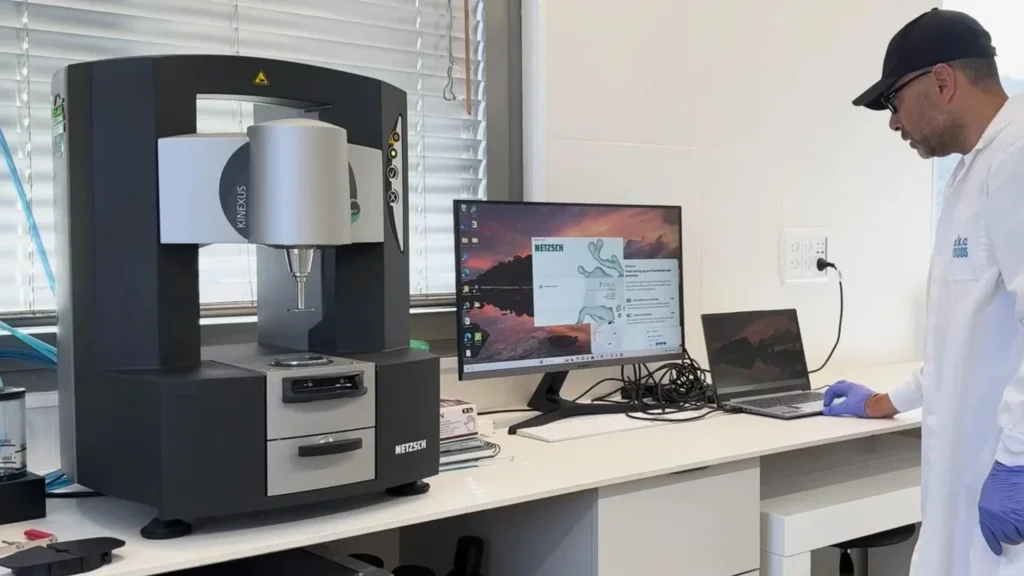
David Sack started AKA Foods after noticing a glaring gap in the food industry. While pharma had been using AI for years, food R&D teams were relying on Excel. When senior technologists walked out the door, decades of know-how left with them.
Forward Fooding: Why did you start the company and what impact do you want to generate?
David Sack: I started AKA Foods to bring AI into food. The problem in front of us at the start was plant-based: the industry was working hard to rebuild meat and dairy from plants, with very little intelligence to draw on. What struck me was how little AI there was in food at all, especially set against pharma, which had been using it for years. That was the opening.
The deeper problem became clear quickly. The most sophisticated tool most R&D labs had for managing formulation history and sensory data was Excel, and when a senior technologist left, decades of know-how walked out with them. Every other function had modernised. R&D had not, and R&D is where the products that feed billions of people get designed.
The impact I want is twofold. First, when that knowledge is retained and reusable, the whole food system can reformulate far faster when an ingredient becomes scarce or a regulation shifts, which is no longer a rare event. Second, R&D teams get their time back for the harder problems, making products that are genuinely healthier and more sustainable, instead of rediscovering what their own labs already knew.
Forward Fooding: How does AKA Studio quantify the hidden costs of failed reformulations that currently lack an audit trail?
David Sack: Failed reformulations are the most expensive thing in food, and almost nobody can see them, because they leave no audit trail: no post-mortem, no line item, no record. The cost of being slow or wrong gets absorbed into next quarter’s launch slate and is never named. AKA quantifies it by capturing every project attempt, including the ones that never ship, and attaching real numbers to each: the R&D days spent, the BOM cost of every formulation tried, and the rework when a team has to revisit a dead end. Because those attempts are now recorded rather than forgotten, the spend behind them can be added up for the first time. The cost that used to be buried becomes a figure an R&D leader can put in front of a board.
Forward Fooding: In what ways can the platform create a post-mortem record for unsuccessful projects to inform future R&D budgeting?
David Sack: Once a project is recorded, including the ones that never shipped, the platform turns it into a post-mortem that survives the team that ran it: what was attempted, in what order, and why it stopped. For budgeting, that record is the missing input. R&D leaders can see how long similar projects actually took rather than how long they hoped, where money tends to get spent before a concept proves viable, and which kinds of project carry the highest risk of a dead end. Instead of setting next year’s budgets and timelines from launches alone, which only show the work that succeeded, they can plan from the full history of attempts. The dead end one team hit stops being a surprise another team pays for again.
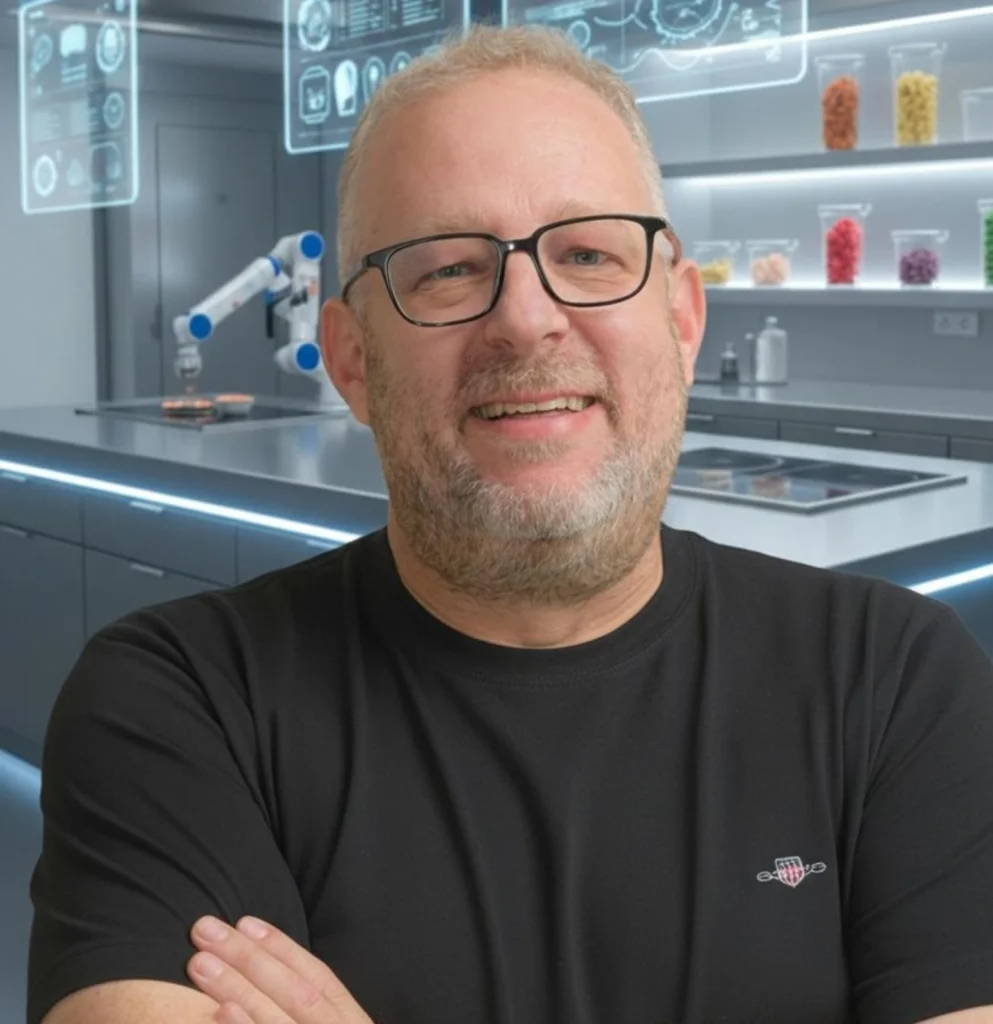
AKA Foods’ Co-founder & CEO, David Sack
Designing for the Real Lab
Building an AI tool for food scientists requires understanding exactly how they work. AKA Studio does not try to predict consumer taste or replace human judgement. It organises a company’s own R&D knowledge.
Forward Fooding: How do you prioritize feature development between sensory data integration, formulation management, and AI assistant capabilities?
David Sack: Formulation management is the foundation, because it is the system of record everything else depends on, so we keep it solid first. From there, we prioritise by what our enterprise deployments need next and where each capability adds the most knowledge value. The Sensory module connects real human sensory data to that formulation history so the platform reflects how products actually perform, not just their specifications, and the AKA AI Assistant sits on top to make that combined knowledge instantly retrievable and usable. The order is deliberate: get the record right first, then build the layers that make a technologist reach for it every day.
Forward Fooding: What feedback have you received from early adopters about AI-generated “hallucinations” and how are you mitigating them?
David Sack: The most common concern technologists raise about generic AI tools is that they invent plausible-sounding answers with no basis in the lab’s actual work, and early adopters told us the same. Our approach removes the conditions that let that happen. The AKA AI Assistant does not generate from a general model of the world; it retrieves and organises a client’s own validated formulations, sensory results, and project records, and every output traces back to the source record it came from. If something is not in the client’s knowledge base, the system does not invent it. The technologist stays the decision-maker, checking the platform’s output against their own judgement, so the tool supports the expert rather than substituting for them.
Forward Fooding: What lessons have you learned from failed food-AI startups, and how does AKA Foods avoid those pitfalls?
David Sack: Food AI is still a new field, and there are genuinely few startups working in it, far fewer than in most areas of applied AI, so the lessons come from a small set of attempts rather than a crowded field of failures. The ones that have stumbled tend to repeat the same three mistakes: positioning AI as a replacement for food scientists, building generic models without the proprietary data that would make them useful, and treating taste as something to be modelled away rather than a human judgement. AKA is built as the opposite of each. The platform elevates technologists rather than replacing them, it activates a company’s own R&D knowledge rather than running on a generic model, and it does not try to predict consumer taste, because taste belongs to people. It is developed daily inside real food labs, tested against actual product work, which keeps us anchored to the real problem, lost institutional knowledge, and to the people the platform exists to serve.
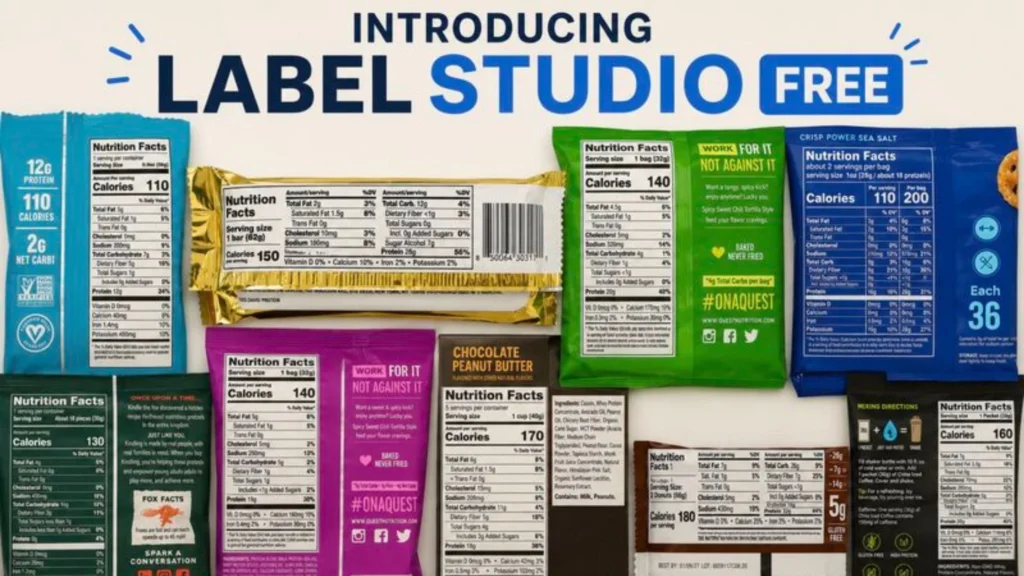
AKA Label Studio, a free professional labelling tool built by AKA Foods’ in-house food R&D team
Security and Enterprise Scaling
Trust is everything when it comes to proprietary formulations. AKA Foods ensures that each client’s data remains entirely private, treating security as a property of their architecture rather than an afterthought.
Forward Fooding: Can you elaborate on the security architecture of AKA Foods that ensures client data remains private and is not used for model training?
David Sack: Every client’s data lives in its own isolated environment and belongs to that client. It is never pooled with other customers’ data and never used to train shared or foundation models, so a company’s proprietary formulations and sensory results stay theirs alone. Access is controlled and the platform is SOC 2 certified and ISO 27001 compliant for security and data governance. For enterprises with strict data sovereignty requirements, we offer on-premise deployment, so the data never leaves their own infrastructure. The platform is built to activate each client’s private knowledge, not to learn from a crowd, which means privacy is a property of the architecture rather than a policy added on top.
Forward Fooding: Given recent award recognition and the TDC partnership, how are you scaling the enterprise sales motion globally?
David Sack: We scale through a mix of direct and channel sales, not partnerships alone. For large enterprises, a direct motion works well, and we deepen those deployments over time. Regional channel partners then extend our reach into markets we could not cover efficiently on our own, across both enterprise accounts and the small and mid-size manufacturers that are hardest to reach directly. Technology Driven Concepts (TDC) shows how the relationship can evolve: they began as an early customer and design partner, and now also act as a channel partner spreading the technology across South Africa. In Brazil, Food Hub LATAM is doing the same with that segment. What we look for in a channel partner is genuine category depth and local relationships to pair with our technology and speed, which is how we grow across Europe, Africa, Asia and Latin America while our direct team keeps the enterprise accounts close. Recent award recognition adds credibility that opens those conversations faster.
Forward Fooding: What strategies do you employ to convince large incumbents to invest in an always-on R&D platform despite the lack of visible failure costs?
David Sack: The hard part of the internal case is that the cost of slow or failed R&D is buried, so we do not ask incumbents to take the value on faith. We start from a real R&D problem the client already has and tie the platform to the operational numbers their own team already reports, so the case is made in their language, not ours. We frame AKA as always-on infrastructure that gets more valuable the longer it runs, not a one-off project tool, which is how smaller challenger brands keep moving faster than far larger competitors. And we anchor it in proof rather than promise: our first validated case study, with Technology Driven Concepts (TDC), shows faster access to past formulations, less duplicated work, and more confident decisions inside a real R&D team, with further case studies to follow.
Forward Fooding: What are the key high-level metrics you use to track cycle time, knowledge retrieval, cost, and capacity?
David Sack: We track four high-level metrics with every client. Cycle time: the days from brief to first viable prototype, and from prototype to plant trial. Knowledge retrieval: how long R&D teams spend searching for past formulations, sensory results, and project files before they can even start work. Cost: BOM cost at parity, meaning the same sensory and functional targets met for less. And capacity: the number of validated concepts a team can move to launch each year without adding headcount. Retrieval and cycle time tend to improve first; capacity is the compounding result that shows up over a full year.
Forward Fooding: What metrics beyond cycle-time and cost do you track to demonstrate platform impact for enterprise clients?
David Sack: Beyond cycle time and cost, the metric that matters most, and the hardest for any company to capture, is knowledge retention: how much of a senior technologist’s know-how stays usable to the team after they leave. This is the problem AKA was built to solve. In most labs that knowledge is undocumented and leaves with the person; we measure the share of it that stays live and searchable, in their formulations, sensory results and reasoning, once they have gone. For an enterprise that is the difference between losing a decade of expertise to one resignation and keeping it as an asset the next technologist builds on. Capacity is the productivity expression of the same gain: a team that holds onto its knowledge takes on more without adding headcount.
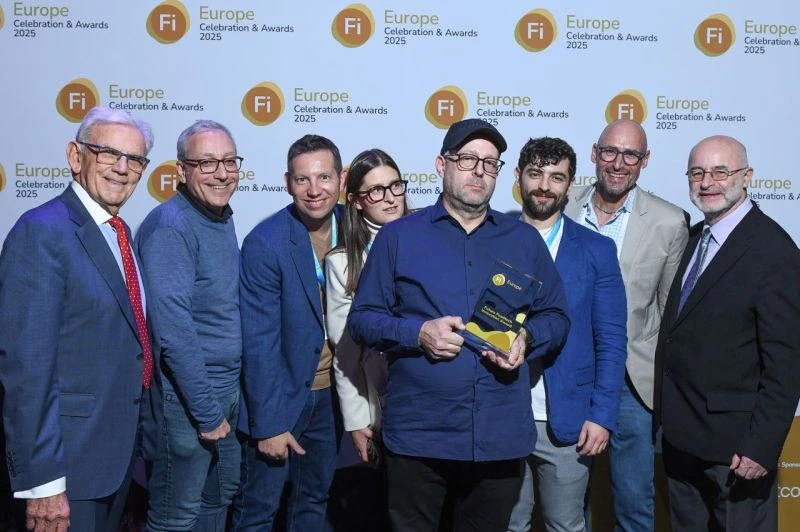
AKA Foods Team
The Road Ahead: A Generational Shift in R&D
AKA Studio is more than a project tool. It is becoming the system of record where every formulation and sensory result lives, compounding in value with each project. The company’s vision extends beyond food into adjacent sectors, aiming to unlock innovation across cosmetics, pharmaceuticals, and advanced materials.
Forward Fooding: What is your long-term vision for AKA Studio as the default operating system for food R&D?
David Sack: Our vision is that every great food idea comes to life faster, smarter, and more affordably. In the near term that means becoming the system of record, where every formulation, sensory result, and project file lives in one private place that compounds in value with each project rather than scattering across spreadsheets and people’s heads. As the default operating system for food R&D, AKA Studio becomes the layer every technologist works through.
Longer term, the same knowledge layer that starts in R&D can reach the wider problems the industry faces next, from scale-up and production to the marketing and logistics decisions that run on the same product data. And because the framework we use to organise the variables of taste, texture, and aroma applies wherever objective and subjective data meet, it opens new verticals beyond food, including cosmetics, pharmaceuticals, and advanced materials.
Forward Fooding: Let’s finish off with a bang: imagine it’s 10 years from now and your company has fully achieved its original vision. Describe the one headline you would be most proud to read about the impact your company has generated.
David Sack: “How a Generation of Food Scientists Stopped Losing Their Best Work”
This ambition cuts straight to the human problem AKA was built to solve. By capturing tacit knowledge and making it searchable, the platform ensures that decades of expertise remain an asset long after a technologist retires or moves on. As AKA Foods expands its footprint across Europe, Africa, Asia, and Latin America, the team is focused on deepening enterprise deployments and proving the value of their always-on infrastructure.
Learn more about AKA Foods at https://aka-food.com/.
Forward Fooding is the world’s first collaborative platform for the Food & Beverage industry via FoodTech Data Intelligence and Corporate-Startup Collaboration — Learn more about our Consultancy and Scouting Services and our Startup Network.