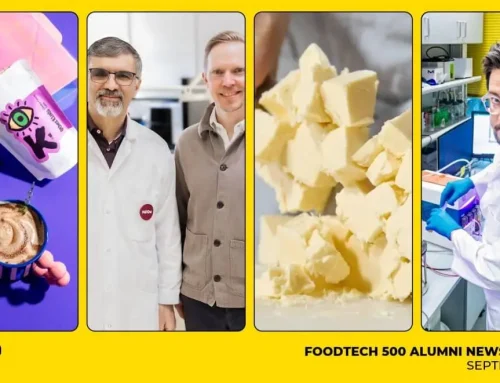
The FoodTech 500 is dedicated to celebrating diversity and inclusivity in all its forms. We are excited to reveal that out of the 500 finalists, 138 have been founded by women. In this feature, we spotlight these remarkable founders and gain insights from Mecca Ibrahim, Co-Founder of Women In The Food Industry. For over five years, Mecca has been building a community for women in the food industry here in the UK.
Women in the FoodTech
In recent years, there has been a growing focus on highlighting women in the Food Industry. A quick web search reveals numerous articles celebrating top female entrepreneurs like this article published by EU-Startups, titled “Top 60 European Women transforming the Agrifood Sector”. This newfound emphasis on women in the food industry extends to top F&B companies like Unilever, Danone, and Nestle that have made it a top priority to reach the UN’s Fifth SDG goal of gender parity by 2030. These companies have included diversity, equality, and inclusion (DEI) strategies and have taken part in gender parity initiatives, like the Bloomberg Gender-Equality Index (GEI), an index tracking public companies committed to disclosing efforts for gender equality through policy, representation, and transparency. Danone and Nestle have been featured in the Index for five consecutive years, a supposed testament to their commitment to fostering an equitable workplace culture. Danone also released a breakdown of female leadership roles from 2018 to 2022 – making the point that representation of women in these positions have gradually increased over the years: female executives from 26% to 33%, female directors from 40% to 43%, and female managers from 46% to 53%.
Despite various initiatives and objectives, there is a need to ensure that companies are truly fostering substantive change in diversity, equity, and inclusion (DEI). As Mecca stresses, “It is easy for organisations in this space to say that they follow all laws on maternity and paternity leave, equal pay and do not discriminate in employment ads. However, DEI usually requires a cultural change and one that should be embedded and embraced into the whole DNA of the company, from recruitment, education and training right through to retention, promotion and boardroom decisions.”
Female entrepreneurs face a particularly daunting challenge in the food industry, as evidenced by a recent report from Emerging Europe. According to the article, in Central and Eastern Europe (CEE), women received only 1% of the capital deployed to entrepreneur in the region. In contrast, 5% of funding went to mixed-sex founder teams, while a staggering 94% was allocated to all-male teams.This funding disparity is especially concerning given that women account for 2.2 million entrepreneurs in the CEE region, with 20% of them employing staff.
A potential explanation for the funding disparities faced by female entrepreneurs in the food industry is the prevalence of gender biases, as documented in various studies. A report by Vegan Women Summit dating from 2022 revealed that 70% of women and 75% of Women of Color working in the plant-based and alternative meats sector experienced bias during fundraising. In 2020, an article based on 20 years of combined experience in entrepreneurial hubs like Silicon Valley and Singapore, found that pervasive gender bias was ingrained in the pitching process. These biases can manifest in subtle forms, like preferences for male-presented pitches or differences in the way in which males and females are questioned. These biases ultimately resulted in less or no fundraising for female entrepreneurs, even when their business proposals and qualifications were equally strong. Another study conducted by EIF in 2023 cited that homophily and gender perceptions were among the reasons why VC investors might be biased against women. These biases are further highlighted by the stark statistic that women represent only 7% of venture capital investors in the CEE region.
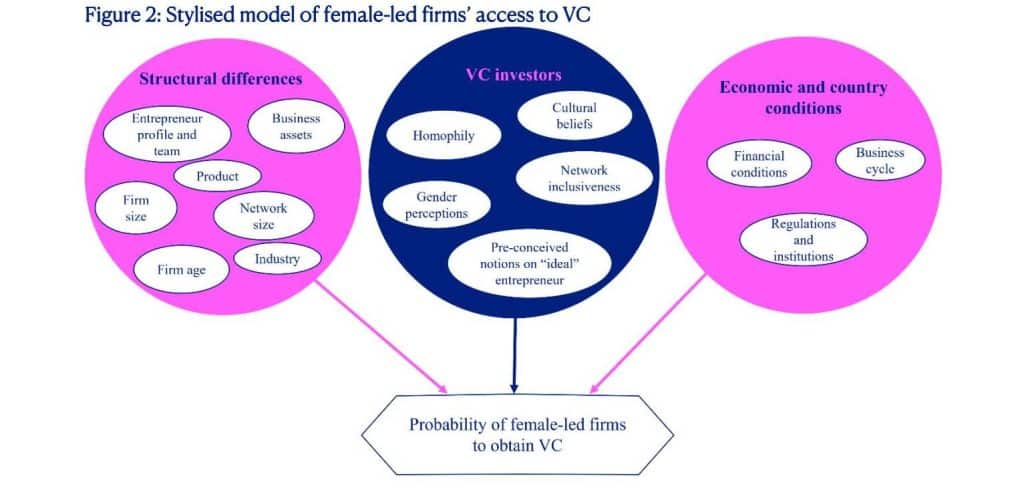
The diagram shows the complex interplay of factors that shape female-led firms’ access to VC funding: structural business differences, VS investor biases, and macroeconomic factors. Source: EIF report.
Despite efforts to promote inclusivity, the AgriFoodTech industry exhibits a lack of female representation, particularly in leadership positions, access to venture capital, and avenues for growth. Addressing these deeply ingrained biases will be crucial to creating a more equitable and inclusive funding environment for female entrepreneurs in the food industry and beyond.
In recent years, several programs and mentorship initiatives have been established to support women entrepreneurs in the food and agriculture sectors. For instance, The EIT Food Empowering Women in Agrifood project offers 80 female entrepreneurs the opportunity to participate in a six-month entrepreneurial program to develop new innovative solutions to address issues in the agri-food sector. The literature also suggests that increasing the presence of female venture capitalists (VCs) could be the key to boosting female entrepreneurship and closing the gender gap. Women VCs may be more inclined to invest in female-led startups, helping to address the biases and barriers that have historically hindered women’s access to funding.
There are also encouraging signs of progress. AgFunder’s data highlights a positive trend, with the percentage of companies having at least one woman founder or co-founder rising from 9% in 2002 to approximately 22% by 2020 among 1,061 companies. The FoodTech500 list is also a testament to this positive trajectory, with 28% of the companies listed having one or more female founders.
Before delving into the specific initiatives and programs aimed at addressing the gender gap in the AgriFoodTech industry, it is crucial to reiterate why increasing female representation in leadership roles is so vital.
“Diversity is vital for the future of AgriFoodTech, as women, who are often primary food preparers in households, can leverage their lived experiences to benefit the industry. Qualities traditionally associated with femininity, such as empathy and nurturing, are integral to business success. Moreover, since women are typically the primary household shoppers, their insights into product preferences and retail experiences are invaluable for feeding families”, Mecca adds.
For more information, you can check out Women in the Food Industry.
You can access the full 2023 FoodTech500 ranking and global FoodTech ecosystem insights here.
Taxonomy: To learn more about Forward Fooding taxonomy click here.
AgriFoodTech reports: Explore all other AgriFoodTech-related reports here.
Meet the Women shaping the future of FoodTech
Tisha Livingston, Co-Founder at 80 Acres Farms
Jacqueline Heard, Co-Founder & CEO at Enko
Magi Richani, Co-Founder at Alpine (previously Nobell Foods)
Clemence Pedraza Co-Founder at Umiami
Marie Burrows, Co-Founder at Vertical Future
Cathy Ye, Co-Founder at Ivy Farm Technologies
Kelsey Tenney, Co-Founder at Voyage Foods
Dr. Kasia Gora, Co-Founder at SCiFi Foods
Taly Nechushtan, Co founder at Innovopro
Assoc Prof. Derya Baran, Co-Founder at RedSea
Laura Katz, Co-Founder at Helaina
Tsipi Shoham, Founder & CEO at GreenOnyx
Hamutal Yitzhak, Co-Founder & CEO at Else Nutrition
Dr. Sara Marquart, Co-Founder at Planet A Foods
Isabelle Botticelli, Co-Founder at Mootral
Heejung Kim, Co-Founder at Cellmeat
Dr. Leila Strickland CEO & co-founder, Michelle Egger, Co-founder at Biomilq
Dr Tal Zeltzer, Co-Founder & CTO at Phytolon
Melissa Snover, Co-Founder at Nourished
Hélène Briand, Co-Founder at Bon Vivant
Maxine Roper, Co-Founder at Connecting Food
Anat Halgoa Solomon, Co-Founder at Saturas
Emily Malina, Co-Founder at Spoiler Alert
Maija Itkonen, Co-Founder & CEO at Onego Bio
Shannon Willness, Co-Founder at SWAT Maps
Anne Palermo & Brittany Chibe, Co-Founders at Aqua Cultured Foods
Reka Tron, Co-Founder at Multus
Olga Dubey, Co-Founder at AgroSustain
Gali Yarom, Co-Founder & CEO at Better Juice
Dana Yarden, Co-Founder at BioBetter
Priyanka Srinivas, Co-Founder at The Live Green Company
Daphna Heffetz, Co-Founder & CEO at Wanda Fish
Nona Yehia & Caroline Croft-Estay, Co-Founders at Vertical Harvest Farms
Valeria Kogan, Founder & CEO at Fermata
Shannon Falconer, Founder & CEO at BioCraft Pet Nutrition
Valentina Rogacheva, Co-Founder at Verqor
Inga Jasiuvian & Caterina Racca, Co-Founders at Heaven
Ahrum Pak, Co-Founder & CEO at Winwin
Anastasia Krivoruchko, Co-Founder & CEO at Melt and Marble
Abigail Barnes, Co-Founder & CEO at Amulet
Giovanna Meneghel, Co-Founder & CEO at Nude.
Maddalena Zanoni, Co-Founder at Dreamfarm
Veronica Garcia-Arteaga, Co-Founder, Co-CEO & CTO at Neggst Foods
Moria Shimoni, Co-Founder & CTO at Forsea Foods
Anya Doherty, Founder & CEO at Foodsteps
Margarita Lopez, Co-Founder at Veloz Bio
Leonie Jahn, Co-Founder at MATR Foods
Adèle James, Co-Founder & CTO at Phagos
Elisa Bertini & Maria Eugenia Farias, Co-Founders at Puna Bio
Amanda Vargochik, Co-Founder & CIO at SinnovaTek
Parini Kapadia, Founder & CSO at Zero Cow Factory
Elin Roberts, Co-Founder & CMO at Better Nature Tempeh
Melissa Sharp, Co-Founder at Modern Baker
Tanja Bogumil, Co-Founder & CEO at Lovely Day Foods
Rafaela Gontijo Lenz, Founder & CEO at NUU
Lynette Kucsma, Co-Founder & CMO at Natural Machines
Allie Broddy, Co-Founder at Crush Dynamics
Sara Guaglio, Co-Founder & COO; Julia Streuli, Co-Founder & CEO, Cristina Prat, Co-Founder at FUL Foods
Margot Vandevoort, Co-Founder at Willicroft
Jenny Lemieux, Co-Founder & CEO at Vivid Machines
Tamara Leigh, Co-Founder & CEO at EIO Diagnostics
Jasmin Ravid, Co-Founder & CEO & Daria Feldman, Co-Founder & CTO at Kinoko-Tech
Andrea Jagodic, Co-Founder & CTO at Flybox
Katy Barfield, Founder & CEO Yume Food
Irene Rupert, Co-Founder at AgrigateOne
Ambra Milani, Co-Founder & IDO at Cynomys
Juliette Sabatier & Lise Mailliard, Co-Founders at Tinybird
Ninna Granucci, Co-Founder & President at Green Spot Technologies
Laura Knight, CEO at The Smarter Food Company
Daria Reisch, Co-Founder & CEO; Sharon Wulff, Co-Founder & CPO at Agrinorm
Racheli Vizman, Co-Founder at Egg’n’Up
Solveiga Pakštaitė, Founder at Mimica
Dr Rachel Evans, Co-Founder & Chief Science Officer at Senoptica Technologies
Martha Wenzel, Co-Founder & CEO at E-Terry
Jennifer Cote, Co-Founder & CEO at Opalia
Taly Feldman Sivan, Co-Founder & CBO at Meala Foodtech
Rozalin Aliramaei, Founder & CEO at Elenovations
Lucie Kriegshauser, Co-Founder & CTO at Amatera Biosciences
Ifat Hammer, Co-Founder & CTO, Ifat Peled Dinstag, Co-Founder & CEO at Liva
Aviaja Riemann-Andersen, Co-Founder & CEO at Agrain
Susana Sánchez, Co-Founder & CSO at Moa FoodTech
Marian Bolz, Co-Founder & CTO, Hannah Brown, Co-Founder & CMO at Organifarms
Rania Reda, Co-Founder & CEO at Brito Cloud Kitchens
Joni Symon, Co-Founder & R&D Scientist at De Novo Foodlabs
Luz Sanz, Co-Founder & CEO at Väcka
Coralie Hellwig, Co-Founder at Millow
Saskia Tersteeg, Co-Founder at Time Travelling Milkman
Netta Granot, CEO & Co-Founder at EXOSOMM
Sushma Shankar, Co-Founder & COO; Natalia Efremova, Co-Founder at Deep Planet
Florencia Salcedo & Daniela Caprile, Co-Founders at