Welcome to the Forward Fooding FoodTech 500 Sector Spotlight Series, where we go deep on each domain: the data, the technologies, and the companies. After Ag Biotech, Food Waste Tech and Upcycling, and Protein Fermentation, Edition 04 turns to the biggest domain on the list: Farm Management and Precision Farming.
Farm Management and Precision Farming holds 63 finalists, 12.6% of the list, up 21% from 52 in 2024, as we shared in our 2025 unveiling. It is also the most commercial domain we have covered in this series so far: 94% of its finalists already generate revenue, against 91% for Waste to Value, 71% for Ag Biotech and 80% across the full list.
The money is moving the same way. Data from our FoodTech Data Navigator shows the domain’s share of global AgriFoodTech funding rising from 2.6% in 2021 to 4% in 2025 (2025 whitepaper), part of the upstream shift we described as FoodTech Wave 3.0.
Some of these names will be familiar. Way back in 2022, when we asked Precision farming: what’s next?, we profiled CropX and xFarm as examples of where the space was heading. Today they are the two highest-ranked companies in the domain, at #8 and #12.
What is Farm Management and Precision Farming?
Precision farming means observing, measuring and responding to differences within and between fields so water, fertiliser, crop protection and labour go only where they are needed. Farm management software brings this data together and turns it into decisions a farmer can act on.
In Edition 01 we drew the line between the two neighbouring domains: Ag Biotech changes a crop’s biology, while precision farming manages the field with sensors, software and data.
That makes this a data domain above all. In the FoodTech Data Navigator, 47 of the 63 finalists carry the “Data intelligence” tag, 43 “Decision support technology” and 29 “AI & Machine learning”. Almost every company collects data. What separates them is the data they capture and who pays for the decision it drives.
Why it matters more now
Farmers have always managed variation. What has changed is how much it now costs to get it wrong, especially as changing weather patterns put critical resources at risk.
- Water is getting scarcer and more regulated. For instance, the EU’s Water Resilience Strategy now demands at least a 10% gain in water efficiency by 2030. Meeting this target is entirely achievable; the European Environment Agency points to a 20% cut in water waste in irrigated agriculture by simply adopting precision irrigation technologies, smart farming tools, and climate-resilient crop selections. (source).
- Margins are tight. Nitrogen fertiliser prices were 71% above the 2024 average in April 2026, and McKinsey’s latest survey found farmers’ net spending intentions down 24 percentage points (Global Farmer Insights 2026). A new tool now has to prove its value and pay for itself within a season.
- Buyers and regulators want farm data. Deforestation rules, Scope 3 reporting and carbon programmes all need information that starts in the field. More on that below.
Together, these pressures are turning precision farming from a nice-to-have to an essential tool for making and validating daily farm decisions.
Farm Management and Precision Farming by the numbers (FDN Numbers)
This is a domain of lean, revenue-first businesses. 59 of the 63 finalists (94%) make revenue. 57% are still at pre-seed or seed, and 14% have reached Series B or later, in line with 13.6% across the full 2025 FoodTech 500. The median self-reported raise is about $3M, against $4.5M across the list. Capital is concentrated at the top: six companies (BeeHero, xFarm Technologies, CropX, KETOS, Varaha and Phytech) hold around 55% of the domain’s ~$603M in self-reported funding.
The domain is strong at the top of the ranking too. CropX (#8) and xFarm Technologies (#12) sit in the Top 20, and seven finalists make the Top 50. It also moves fast: Verdi climbed from #286 to #117, Gardin from #267 to #109 and PES Technologies from #421 to #257. 17 companies are newcomers, led by eAgronom at #25.
The 63 finalists span 21 countries, with Europe accounting for 51%. The US leads with 11 companies, followed by Israel and the UK (7 each), Italy (6), and the Netherlands and Australia (5 each), with further finalists in Morocco, Kenya, Sri Lanka, India and Colombia.
| Metric | Farm Mgmt & Precision Farming | Whole list | Note |
|---|---|---|---|
| Finalists | 63 (12.6%) | 500 | #1 domain; +21% vs 2024 |
| Share of global AgriFoodTech funding (FDN) | 2.6% (2021) → 4% (2025) | – | Whitepaper |
| Countries | 21 | 53 | US 11, Israel 7, UK 7, Italy 6 |
| Early stage (pre-seed, seed) | 36 (57%) | 50.2% | – |
| Late stage (Series B or later) | 9 (14%) | 13.6% | – |
| Revenue-generating | 59 (94%) | 80% | Highest in the series so far |
| Median raise (self-reported) | ~$3.0M | $4.5M | – |
| Self-reported total funding | ~$603M | $8.4B | Top 6 hold ~55% |
| Female founder(s) | 19 (30%) | 38% | – |
| BAME founder(s) | 17 (27%) | 26% | – |
| FT500 newcomers | 17 | – | Highest-ranked: eAgronom (#25) |
Source: 2025 FT500 Finalists. Whole-list figures from the 2025 Whitepaper. Note: Funding is self-reported by companies.
Applications for the 2026 FoodTech 500 are open until 15 November. More on how to apply at the end of this piece.
The Precision Farming Map
In 2022, we split precision farming into four approaches: remote sensing, field sensing, precision equipment and farm management. So how do the 2025 FoodTech 500 finalists fall across that map three years on?
To find out, we grouped the 63 finalists by their main technology tag in our FoodTech Data Navigator. Most companies carry several tags, so we placed each one under the tag that best describes its core technology. The result is nine clusters, led by water.
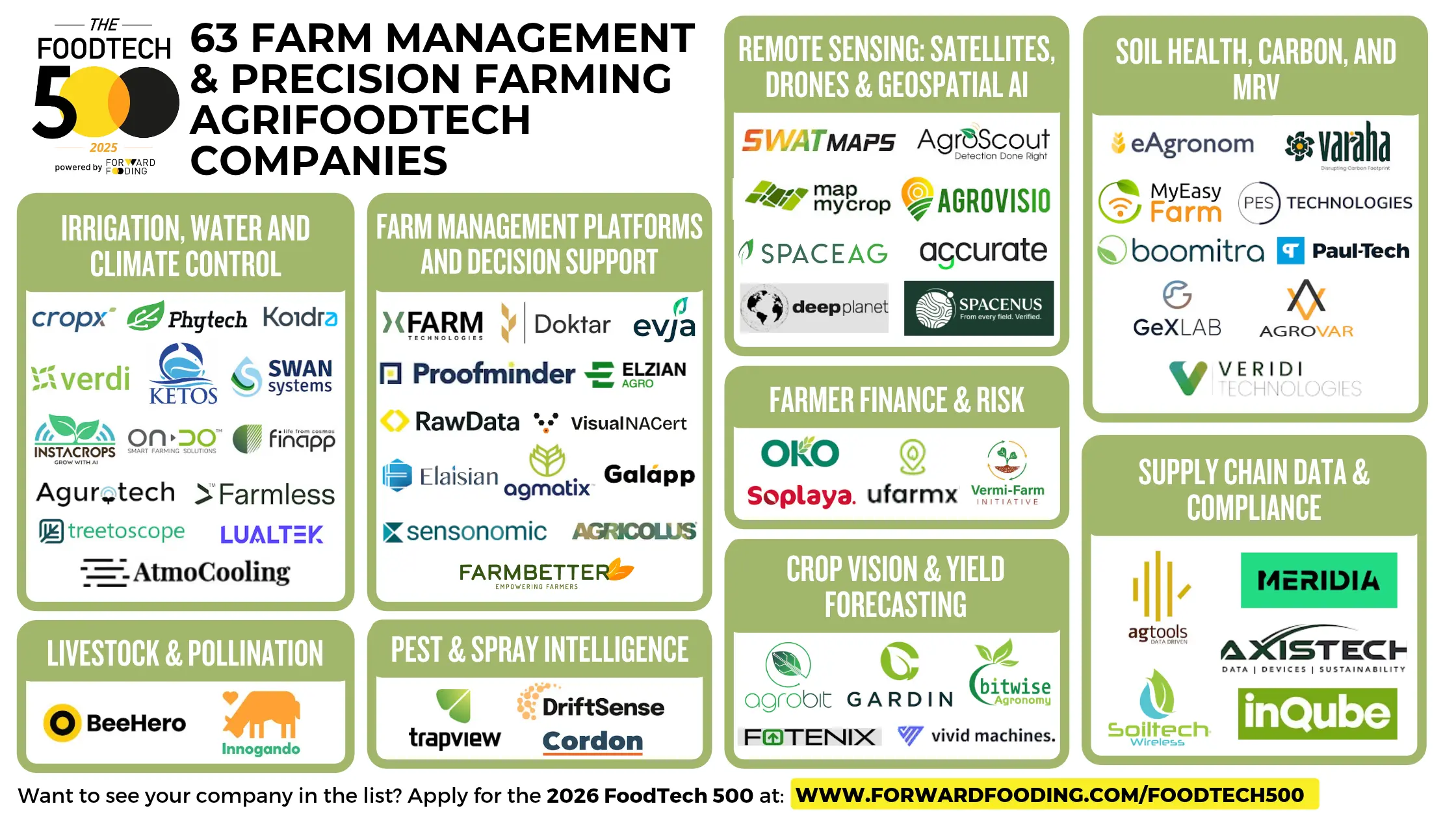
Irrigation, water and climate control (14 finalists)
The largest cluster, and home to the top-ranked company in the domain, CropX (#8). These companies measure soil moisture, plant stress, and water quality, then automate when and how much to irrigate or cool. Water is where precision farming finds it easiest to prove a return.
CropX (#8 in the 2025 FoodTech 500) | Israel | Combines soil sensors, farm data and agronomic models into a farm management system that guides irrigation and crop decisions.
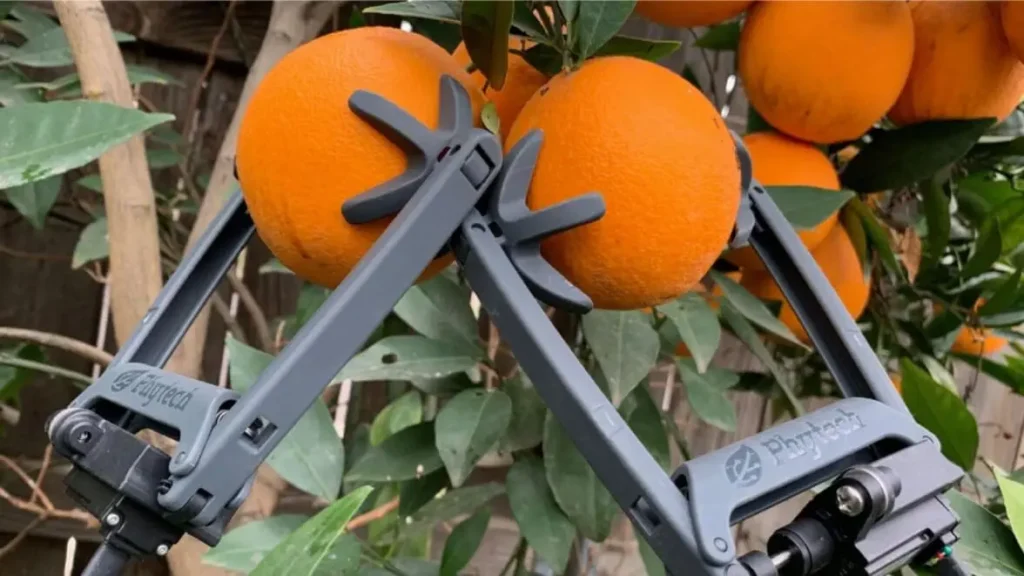
Phytech (#22 in the 2025 FoodTech 500) | Israel | Pairs real-time plant sensing, hydraulic monitoring and an AI farming agent to help growers optimise irrigation and production.
KETOS (#37 in the 2025 FoodTech 500) | United States | Uses robotics, automation and AI to deliver real-time water-quality analytics for farms and industry.
Koidra (#81 in the 2025 FoodTech 500) | United States | Uses AI to automate greenhouse climate and irrigation control, raising yields while cutting resource use.
Verdi (#117 in the 2025 FoodTech 500) | Canada | Builds physical AI for farm infrastructure, starting with affordable irrigation automation.
SWAN Systems (#123 in the 2025 FoodTech 500) | Australia | Runs a precision irrigation and nutrient-management platform that saves water and verifies sustainability outcomes.
Agurotech (#165 in the 2025 FoodTech 500) | Netherlands | Designs robust field sensors and software that give farmers real-time irrigation and crop advice.
Instacrops (#172 in the 2025 FoodTech 500) | United States | Turns field sensor data into AI agents that help farmers make faster, more sustainable irrigation and crop decisions.
Finapp (#177 in the 2025 FoodTech 500) | Italy | Uses cosmic-ray neutron sensing to measure soil moisture across large areas without touching the ground.
ONDO Solutions (#251 in the 2025 FoodTech 500) | Bulgaria | Brings enterprise-grade automation, monitoring and predictive analytics to small and medium crop farms.
FarmBot (#263 in the 2025 FoodTech 500) | Australia | Provides remote monitoring for farm assets, from water tanks and pumps to weather stations.
Treetoscope (#319 in the 2025 FoodTech 500) | Israel | Uses sensor data to manage and optimise irrigation for growers.
Lualtek (#324 in the 2025 FoodTech 500) | Italy | Retrofits existing farm systems with plug-and-play, AI-powered devices to manage water and other resources.
AtmoCooling (#344 in the 2025 FoodTech 500) | United States | Builds evaporative cooling systems that run on saline and brine water to cool field microclimates and save freshwater.
 Courtesy: Phytech
Farm management platforms and decision support (13 finalists)
The operating systems of the farm. This software pulls field, machinery, weather and labour data into one place and turns it into recommendations. xFarm Technologies (#12) shows how far a platform can climb: from #158 in 2021 to #21 in 2024, and into the Top 20 this year.
xFarm Technologies (#12 in the 2025 FoodTech 500) | Switzerland | Offers a digital farm management platform that helps farmers and agrifood supply chains make data-driven, more sustainable decisions.
Doktar (#40 in the 2025 FoodTech 500) | Netherlands | Combines IoT hardware, AI software and farmer engagement to deliver measurable sustainability programmes for agrifood companies.
RawData (#124 in the 2025 FoodTech 500) | Spain | Runs a modular SaaS platform that digitises field and workforce operations for agrifood producers.
Evja (#163 in the 2025 FoodTech 500) | Italy | Uses predictive models, AI and wireless sensors to guide irrigation, nutrition, crop protection and yield.
Proofminder (#185 in the 2025 FoodTech 500) | Hungary | Works as an AI agronomist, combining real-time monitoring, high-precision mapping and automated agronomy.
Elzian Agro (#228 in the 2025 FoodTech 500) | Sri Lanka | Provides climate-smart precision agriculture tools that help farmers make the most of limited resources.
VisualNACert (#233 in the 2025 FoodTech 500) | Spain | Turns agricultural data into insights for crop management, traceability and sustainability across the value chain.
Agmatix (#260 in the 2025 FoodTech 500) | United States | Builds a digital twin of agriculture that turns agronomic data into decisions on inputs and sustainability.
Sensonomic (#276 in the 2025 FoodTech 500) | Norway | Uses adaptive, predictive yield analytics to help growers plan and improve cash flow.
Agricolus (#306 in the 2025 FoodTech 500) | Italy | Offers a platform and app for precision farming, from field monitoring to decision support.
Elaisian (#337 in the 2025 FoodTech 500) | Italy | Uses field sensors and decision support to help growers produce more with fewer resources.
Farmbetter (#362 in the 2025 FoodTech 500) | United Kingdom | Delivers digital advisory to farmers and extension agents through a WhatsApp chatbot, app and dashboard.
Galapp (#460 in the 2025 FoodTech 500) | Colombia | Provides a CRM built for Latin America’s agrichemical companies.
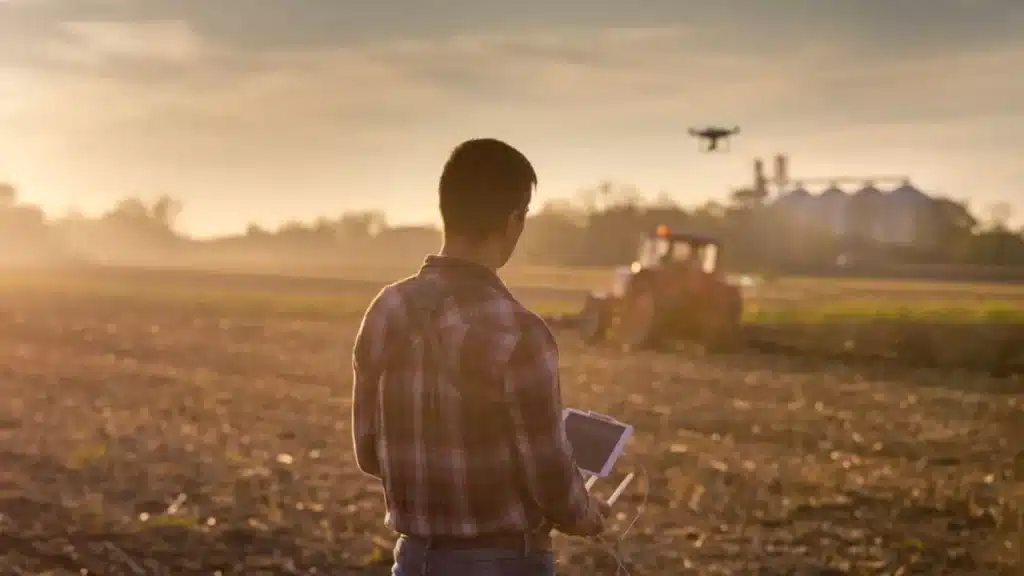 Courtesy: Proofminder
Soil Health, Carbon, and MRV (9 finalists)
These companies measure what is in the soil and verify changes for agronomy, carbon programmes and sustainability reporting. It is the cluster most exposed to Europe’s new soil and carbon farming rules, and home to eAgronom (#25), the highest-ranked newcomer in the domain.
eAgronom (#25 in the 2025 FoodTech 500) | Estonia | Automates on-farm data collection from any tractor for sustainability reporting, carbon programmes and farm management.
Varaha (#66 in the 2025 FoodTech 500) | India | Develops nature-based carbon removal projects with smallholder farmers across Asia and Africa, from regenerative agriculture to biochar.
MyEasyFarm (#83 in the 2025 FoodTech 500) | France | Runs a data and AI platform for monitoring, reporting and verification (MRV) in regenerative and carbon farming.
PES Technologies (#257 in the 2025 FoodTech 500) | United Kingdom | Develops sensor-based soil health testing for farmers and agronomists.
Boomitra (#285 in the 2025 FoodTech 500) | United States | Partners with farmers and ranchers across the Global South to restore soils and generate verified carbon removal credits.
Paul-Tech (#326 in the 2025 FoodTech 500) | Estonia | Combines a real-time soil nitrate sensor with other data to give farmers AI-powered, practical insights.
GeXLab (#369 in the 2025 FoodTech 500) | Australia | Combines ISO-accredited MIR spectrometry with mapping and data software for soil and environmental measurement.
AgroVAR (#416 in the 2025 FoodTech 500) | Bulgaria | Uses AI, soil data and regenerative practices to help farmers improve soil health and generate carbon credits.
Veridi (#417 in the 2025 FoodTech 500) | Netherlands | Makes soil biodiversity monitoring affordable and scalable with AI and automated microscopy.
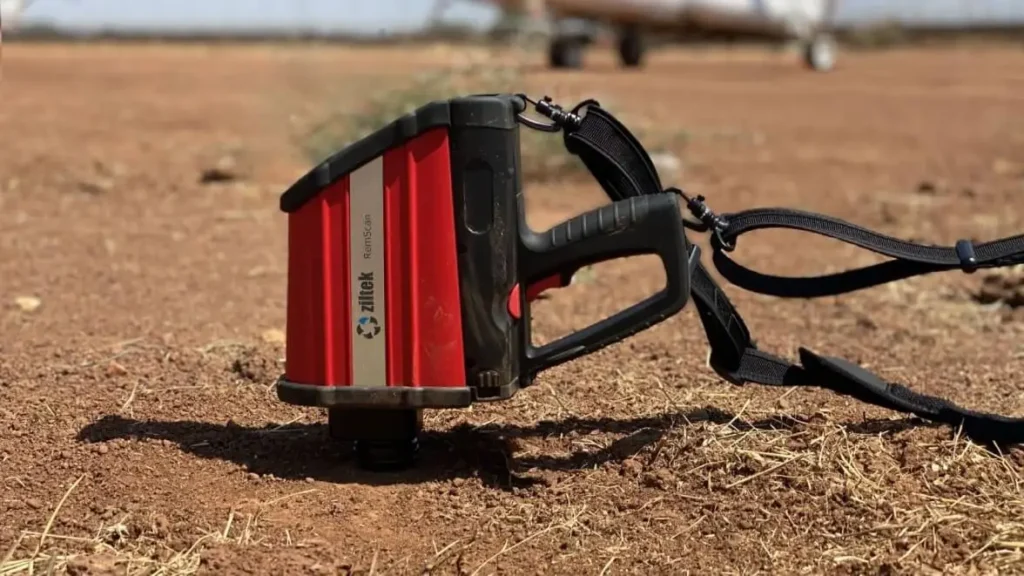 Courtesy: GeXLab
Remote sensing: satellites, drones & geospatial AI (8 finalists)
These companies watch fields from above, using satellite and drone imagery plus AI to monitor crops at scale without hardware in every field. That makes them one of the most scalable routes to smallholders and to large sourcing programmes alike.
SWAT MAPS (#95 in the 2025 FoodTech 500) | Canada | Provides premium precision agriculture services for growers.
AgroScout (#128 in the 2025 FoodTech 500) | Israel | Collects field imagery and analyses it with AI and agronomists to guide operations from planting to harvest.
Map My Crop (#138 in the 2025 FoodTech 500) | United States | Delivers satellite-based crop intelligence to smallholders and agri-enterprises to raise productivity and cut water and fertiliser waste.
Agrovisio (#158 in the 2025 FoodTech 500) | Estonia | Uses multi-satellite data and AI to monitor crops and measure water footprint, soil carbon and nitrogen efficiency.
Space Ag (#213 in the 2025 FoodTech 500) | United States | Combines drone and satellite imagery, IoT sensors and predictive analytics for high-value crop production.
Spacenus (#244 in the 2025 FoodTech 500) | Germany | Uses Earth observation and AI to support sustainable agriculture.
Deep Planet (#322 in the 2025 FoodTech 500) | United Kingdom | Uses geospatial AI to help agricultural businesses optimise resources, productivity and resilience.
Agcurate (#445 in the 2025 FoodTech 500) | Netherlands | Uses satellite imagery and AI to help CPG companies run large-scale agricultural operations.
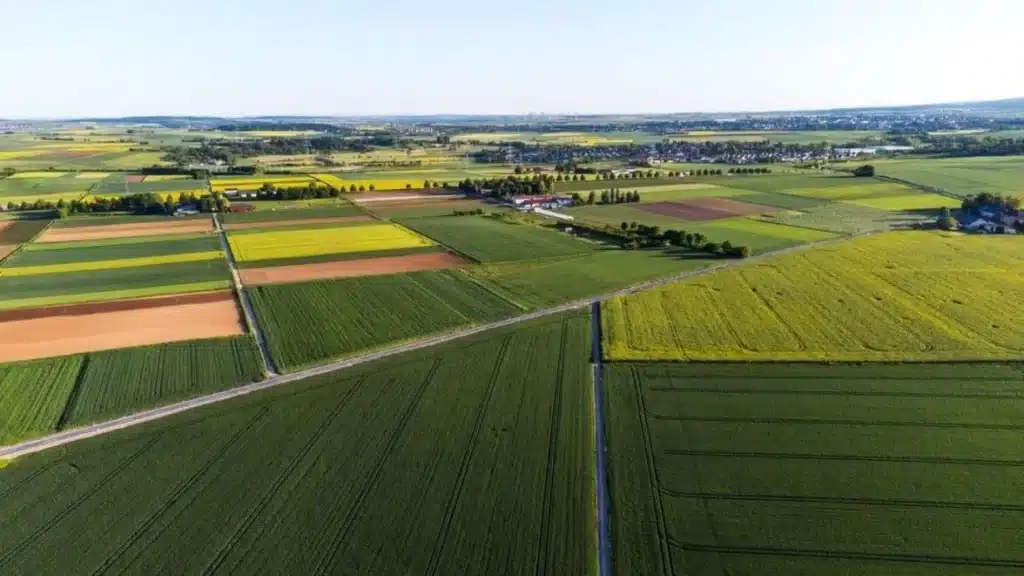 Courtesy: Map My Crop
Crop vision & yield forecasting (5 finalists)
These companies use cameras and computer vision to count, measure and forecast crops plant by plant, mostly in high-value fruit, berries and greenhouse crops. Gardin (#109) is one of the domain’s biggest climbers, up from #267 in 2024.
Gardin (#109 in the 2025 FoodTech 500) | United Kingdom | Uses optical phenotyping sensors to give greenhouse and indoor growers real-time insight into plant performance.
FOTENIX (#192 in the 2025 FoodTech 500) | United Kingdom | Uses smart sensing and AI to help food growers monitor crops and make better decisions.
Vivid Machines (#248 in the 2025 FoodTech 500) | Canada | Uses AI-powered cameras to give fruit growers precise, real-time crop insights that improve yield and cut labour costs.
Bitwise Agronomy (#387 in the 2025 FoodTech 500) | Australia | Combines AI fruit counting, big data and ripening models to forecast berry yields at scale.
Agrobit (#393 in the 2025 FoodTech 500) | Italy | Uses AI and computer vision to help farmers and agronomists optimise and reduce agro-inputs.
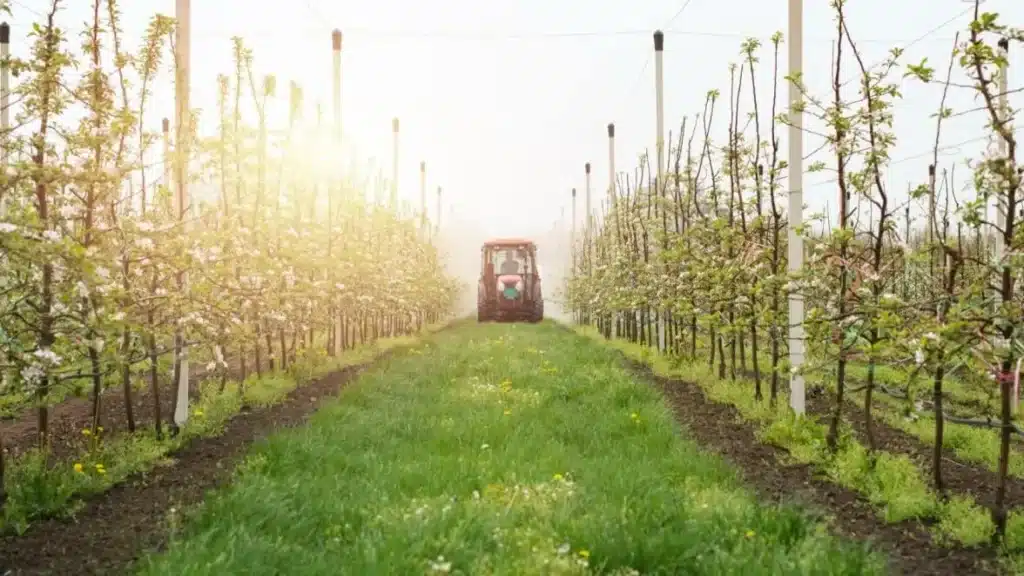 Courtesy: Vivid Machines
Supply chain data & compliance (5 finalists)
This is farm data that leaves the farm gate: traceability, sourcing intelligence and deforestation-risk checks for the companies that buy from farms. With the EU Deforestation Regulation (EUDR) applying from 30 December 2026, it is the cluster with the clearest deadline.
Agtools (#72 in the 2025 FoodTech 500) | United States | Provides real-time, first-mile market and supply data for perishable crops.
Meridia (#115 in the 2025 FoodTech 500) | Netherlands | Helps food and agri companies detect and fix field-data risks around deforestation, data quality and legality.
AxisTech (#305 in the 2025 FoodTech 500) | Australia | Turns fragmented farm data into climate-smart intelligence to measure and reduce agrifood’s environmental footprint.
Soiltech Wireless (#330 in the 2025 FoodTech 500) | United States | Builds hardware and software that connect growers with processors, packers and shippers.
InQube (#377 in the 2025 FoodTech 500) | United Kingdom | Offers a B2B platform for farm-level decision intelligence, traceability and verification of nature-based carbon.
 Courtesy: AxisTech
Farmer finance & risk (4 finalists)
Here, farm data becomes collateral: credit scores, insurance and payments for farmers that banks cannot see, mostly in Africa. It is the domain’s clearest Global South story.
UfarmX (#140 in the 2025 FoodTech 500) | United States | Turns everyday farm data into credit scores so African farmers can access finance without collateral.
SOWIT (#211 in the 2025 FoodTech 500) | Morocco | Combines technology and finance to help agribusinesses strengthen Africa’s food security.
OKO (#298 in the 2025 FoodTech 500) | Israel | Provides automated climate insurance that protects food production in Africa.
Vermi-Farm Initiative (#408 in the 2025 FoodTech 500) | Kenya | Bundles payments, savings, climate-linked loans, micro-insurance and bio-fertilisers for smallholders on a USSD-first platform.
 Courtesy: OKO
Pest & spray intelligence (3 finalists)
These companies predict pest pressure and spray timing so growers apply less, at the right moment. They sit naturally next to the biological crop protection companies we covered in Edition 01.
TrapView (#164 in the 2025 FoodTech 500) | Slovenia | Forecasts the development of target pests so growers can optimise monitoring and crop protection.
DriftSense (#275 in the 2025 FoodTech 500) | Israel | Predicts hour-by-hour spray timing up to 10 days ahead to cut chemical use, costs and drift.
Cordon (#461 in the 2025 FoodTech 500) | United Kingdom | Builds precision agriculture systems that help vineyards and fruit farms reduce fertiliser and pesticide inputs.
Livestock & pollination (2 finalists)
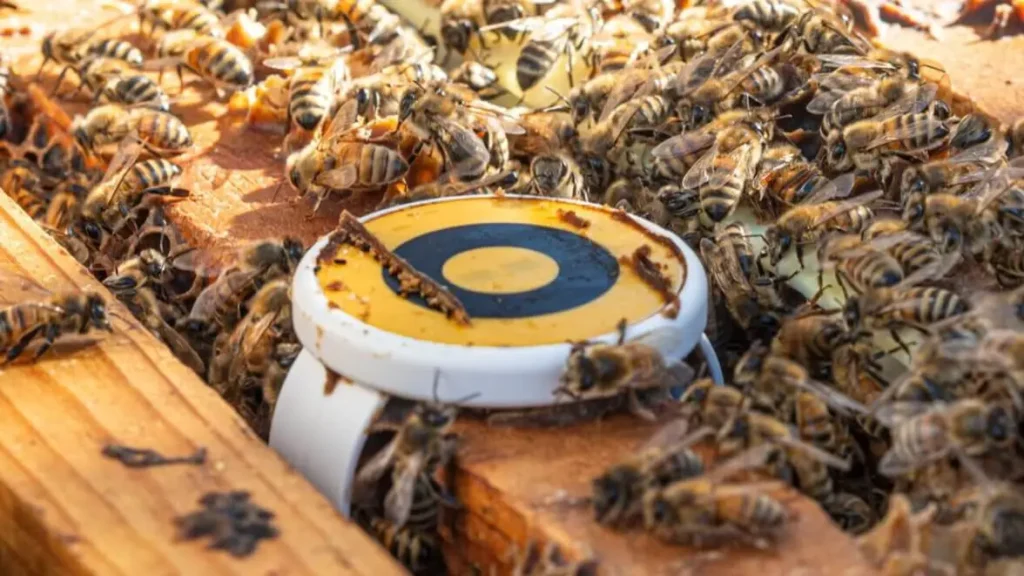
Two finalists put sensors on animals rather than crops. BeeHero (#23) reports the largest raise in the domain, around $71M.
BeeHero (#23 in the 2025 FoodTech 500) | Israel | Uses in-hive sensors and data analytics to improve pollination, bee health and crop yields.
Innogando (#183 in the 2025 FoodTech 500) | Spain | Builds Rumi, a wearable monitoring device that works like a smartwatch for cattle.
 Courtesy: BeeHero
The picture extends beyond this domain. Other FoodTech 500 finalists also bring precision to the field, including Ecorobotix (#7) and its plant-by-plant AI sprayer, MOVE ON (#246), Pollen Patrollers (#225) and AgriCapture (#167), plus Vivent and Solena AG from our Ag Biotech spotlight.
Want to explore these companies and more across AgTech? Find them in the FoodTech Data Navigator.
Why now: the signals for corporates & investors
- Deforestation rules are becoming a data requirement. The EUDR applies to large and medium operators from 30 December 2026, and in May 2026 the Commission confirmed there will be no further delay. Plot-level geolocation and deforestation-risk checks are now a condition of market access. That puts companies such as Meridia, InQube and the remote sensing cluster directly in the path of food and agri buyers.
- Soil and carbon now have EU rules. The Soil Monitoring Directive entered into force on 16 December 2025, giving member states three years to build soil monitoring without adding new obligations for farmers. In summer 2026, the Commission also adopted certification methodologies for carbon farming under the CRCF, covering agriculture and agroforestry on mineral soils. Credible measurement becomes the bottleneck, and that is exactly what the soil, carbon & MRV cluster sells. As FoodTech 500 Ambassador Mariya Hristova put it, better MRV is what gives carbon farming credibility.
- Water efficiency has a number. At least 10% by 2030 under the Water Resilience Strategy, with Common Agricultural Policy support for precision irrigation. That is a direct line to the largest cluster on our map.
- Capital is steady, and incumbents are buying. AgriFoodTech funding was flat at $16.2B in 2025, but upstream startups attracted $9B, up 7%. Farm management software, sensing and IoT startups drew around $1.4B. Exits are happening too: John Deere acquired drone-scouting company Sentera in May 2025 to plug its imagery into Deere’s Operations Center.
- AI is reaching farms through the cheapest door. 17% of farmers now use generative AI for farm-related tasks, with adoption highest in the Americas (McKinsey Global Farmer Insights 2026). For a domain already built on data, that lowers the barrier between a dashboard and a decision.
Where the caution flags are
Adoption is still slow and driven by return on investment. Just under half of farmers (49%) use at least one agtech solution, up four points since 2024, but growth is slowing in mature markets (McKinsey 2026). We made the same point in our 2022 analysis, and it still holds: the technology is ready long before the farm is.
Using a tool is not the same as paying for it. Only 4% of farmers pay for a generative AI tool, and just 6% name AI as a trusted source for decisions, compared with 56% who trust their agronomist (RFD-TV summary of McKinsey’s survey). The companies that win will work alongside the agronomist, not try to replace them.
The field is crowded, and carbon revenue depends on trust. Many platforms compete for the same farmer, while machinery majors now bundle their own data tools. For the carbon-linked models, credibility is everything: our 2025 whitepaper notes the voluntary carbon market fell 61% in a single year, and the new EU certification framework remains voluntary.
Ready to join the 2026 FoodTech 500?
The farm already produces the data. The 63 finalists show that the value lies in turning it into a decision someone will pay for, and you don’t need a mega-round to prove it. If your company builds farm management software, field or remote sensing, irrigation technology, soil and carbon MRV, or agri-fintech, applications for the 2026 FoodTech 500 are open until 15 November 2026. Read what’s new for this year’s edition and apply here.
Forward Fooding is the world’s first collaborative platform for the Food & Beverage industry via FoodTech Data Intelligence and Corporate-Startup Collaboration. Learn more about our Consultancy and Scouting Services and our Startup Network.